$41.99
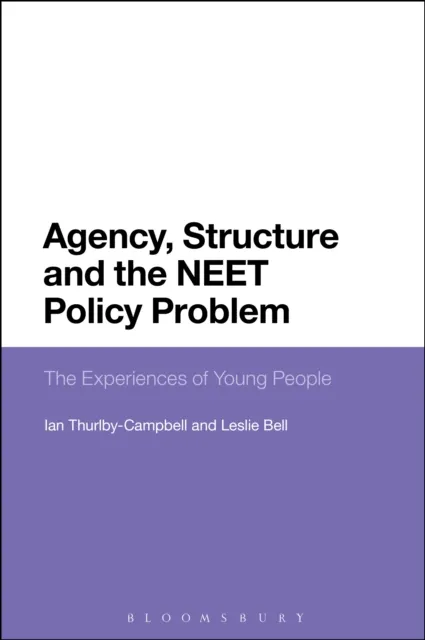
Agency, Structure and the NEET Policy Problem
The Experiences of Young People

Introduction
For many years, government policy has associated young people being NEET (Not in Education, Employment or Training) with educational underachievement, worklessness, generational poverty, poor health, antisocial behaviour, and reduced life expectancies. Researchers and policymakers continue to debate whether young people become NEET as a result of their own choices (i.e. their personal agency), or as a result of external factors (i.e. social, political and economic structures). Most recognise that the truth is somewhere between the two, but a clear understanding of how each interacts in causing young people to become NEET has so far been elusive, making the development of effective policy and practice problematic.
Agency, Structure and the NEET Policy Problem makes headway against this problem through an original approach that draws on social cognitive theory and the lived experiences of young people themselves.
Investigating the lives of NEET young people between the ages of 17-21 in London, this book elucidates the interactions between agency and structure that lead to them becoming NEET, and in doing so, offers a new perspective on the phenomenon. It offers a valuable critique of existing policy, providing both breadth and detail on the factors affecting the trajectories of young people in their transitions to continued education, training, or employment. It offers a way forward for all who are interested in developing, supporting and implementing a revitalised approach to NEET policy and practice, and a framework around which a coherent multidisciplinary approach to addressing NEET could be developed.