£74.50
X-Ray Scattering Techniques for Epitaxial Oxide Thin Films

Overview
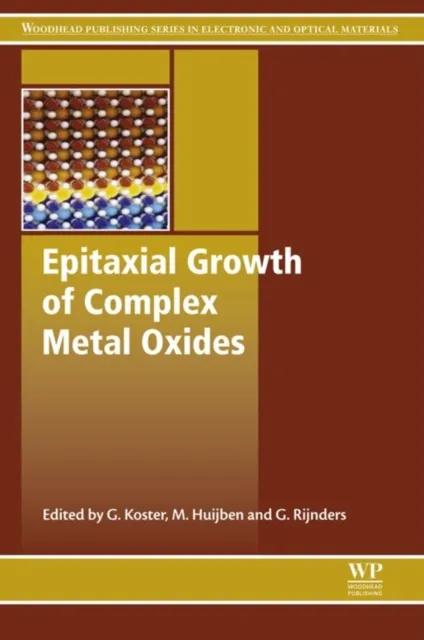
This book acts as a handbook on the topic of x-ray scattering as applied to epitaxial complex oxide films, providing detailed information to collect the data, how to analyze the data and the practical sides of the experiments.
Laboratory-Based X-ray Diffraction Methods
The first chapter considers laboratory-based X-ray diffraction (XRD) methods: the indispensable X-ray characterization methods used for phase analysis, epitaxial relationship determination, advanced analytical and data fitting techniques, and grazing incidence diffraction.
Advanced Techniques at Large-Scale Facilities
The subsequent chapters focus on advanced techniques that are typically performed at large-scale facilities such as synchrotrons: diffuse scattering and strain mapping, coherent X-ray methods, magnetic X-ray scattering and dichroism effects, and pump-probe techniques.
Characterization of Complex Structures
In addition, detailed characterization methods for complex structures such as oxide superlattices, the measurement of oxygen octahedra rotations, and probing of domain arrangements are covered.
Purpose and Audience
The overarching aim of the book is to provide a tutorial-style approach to assist experimentalists actually carrying out their experiments and data analysis. (For instance, the nitty gritty techniques of alignment and experimental setup, along with common mistakes and pitfalls, are often not discussed in textbooks or instruction manuals.)
The book is an invaluable tool for the wide range of researchers working globally on ‘oxide electronics,’ serves as a reference text for the many and varied techniques applied to such materials systems, and showcases new advanced methods in x-ray scattering.