£41.99
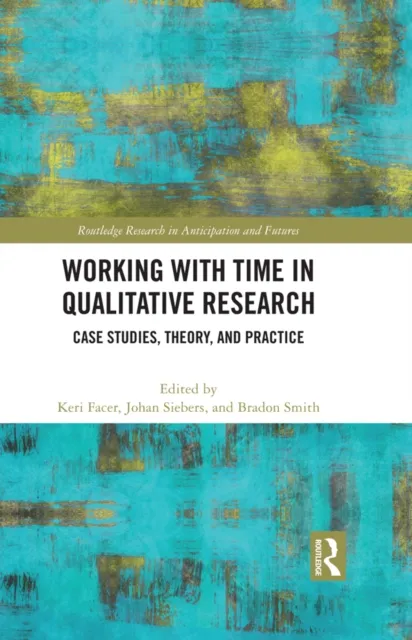
Working with Time in Qualitative Research
Case Studies, Theory and Practice

Introduction
This collection brings together researchers and scholars from across the Arts, Humanities and Social Sciences who are actively exploring the many different ways in which time might be understood, imagined and used in qualitative research. Taken together, the contributions begin to trace the contours of what it might mean to work reflexively with time as an epistemologically constitutive element of research design.
Exploring Temporal Perspectives
The book explores how the choice to work with pasts or futures, with speed or delay, with clocks or the time of the body, with utopias or failed futures (among other things) reframe how social and cultural phenomena are perceived and brought into existence in qualitative research. Drawing on fields as disparate as futures studies and history, literary analysis and urban design, utopian studies and science and technology studies, this collection serves as a resource for both new and experienced researchers in the humanities and social sciences. It is a critically important resource for beginning to explore the wide repertoire of theoretical and methodological tools for working with time in the research process.
Institutional Timescapes and Reflexivity
The book also draws attention to the way that institutional research timescapes – from university workload patterns to funding processes and project timescales – themselves shape how and what it is possible to know in and about the world. It concludes with a rousing manifesto for scholars and researchers, proposing 10 key attributes of temporally reflexive research.