£24.99
What Has No Place, Remains
The Challenges for Indigenous Religious Freedom in Canada Today

Introduction
The desire to erase the religions of Indigenous Peoples is an ideological fixture of the colonial project that marked the first century of Canada’s nationhood. While the ban on certain Indigenous religious practices was lifted after the Second World War, it was not until 1982 that Canada recognized Aboriginal rights, constitutionally protecting the diverse cultures of Indigenous Peoples. As former prime minister Stephen Harper stated in Canada’s apology for Indian residential schools, the desire to destroy Indigenous cultures, including religions, has no place in Canada today. And yet Indigenous religions continue to remain under threat.
About the Book
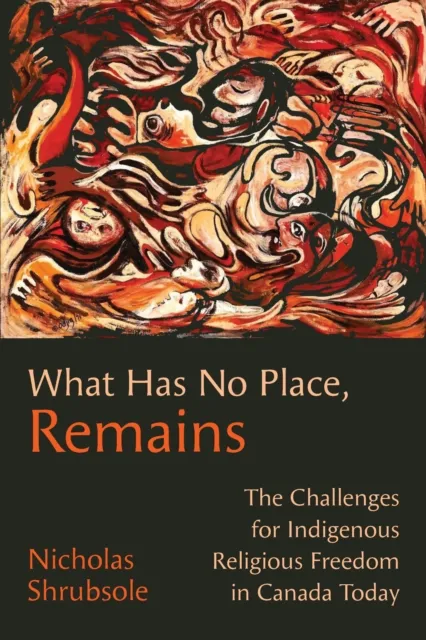
Framed through a postcolonial lens, What Has No Place, Remains analyses state actions, responses, and decisions on matters of Indigenous religious freedom. The book is particularly concerned with legal cases, such as Ktunaxa Nation v. British Columbia (2017), but also draws on political negotiations, such as those at Voisey’s Bay, and standoffs, such as the one at Gustafsen Lake, to generate a more comprehensive picture of the challenges for Indigenous religious freedom beyond Canada’s courts. With particular attention to cosmologically significant space, this book provides the first comprehensive assessment of the conceptual, cultural, political, social, and legal reasons why religious freedom for Indigenous Peoples is currently an impossibility in Canada.