£90.00
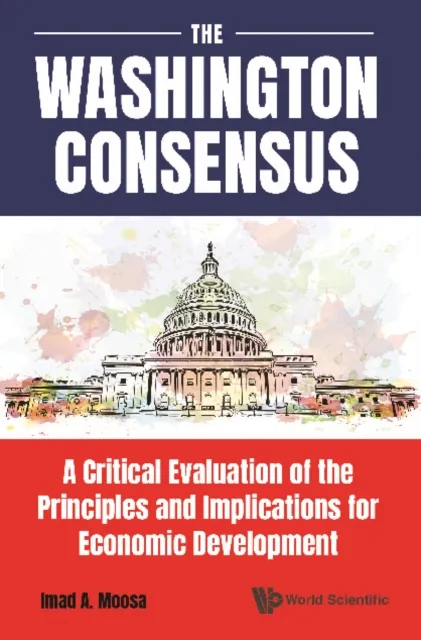
Washington Consensus, The: A Critical Evaluation Of The Principles And Implications For Economic Development

Objective of the Book
The objective of the book is to evaluate critically the ten principles of the Washington Consensus, which govern the conditionality provisions of the IMF and World Bank, and guide the so-called economic reform in developing countries.
Overview and Content
The book starts with an overview of the Consensus, followed by a chapter on IMF conditionality and how they are related. Since the Consensus is inherently neoliberal, a chapter is devoted to a critique of the free market doctrine and the concept of economic freedom as seen by free marketeers.
The Principles of the Washington Consensus
The ten principles of the Washington Consensus (referred to as the "ten commandments") are divided into four groups: fiscal reform, interest and exchange rate policies, liberalization of trade and foreign direct investment, and privatization and deregulation (including property rights).
Philosophical Approach
The book is written in the normative tradition of what ought to be, as opposed to the positive tradition of what is. While it may be tempting to describe the work as "polemic", the underlying issues contain such a significant moral component that pretending to be neutral would be a betrayal of justice and morality.
Intended Impact
In essence, the arguments put forward in the book are intended to dismantle, discredit and debunk a set of principles that are effectively used to loot developing countries.