£1.83
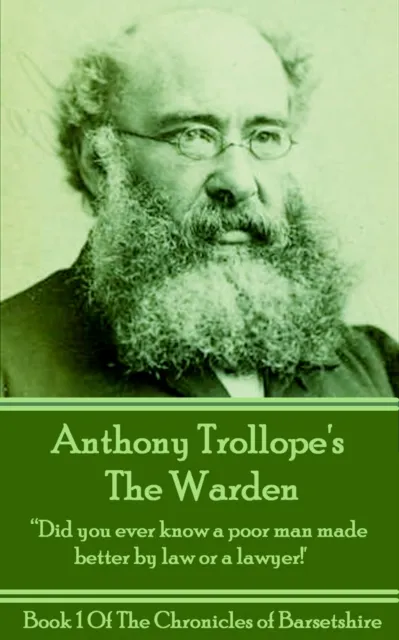
Warden (Book 1)
Did you ever know a poor man made better by law or a lawyer"

Anthony Trollope's Early Life
Anthony Trollope was born in London on 24th April 1815. He is considered a giant of English literature and perhaps his crowning achievement is the series of books known as The Barchester Chronicles. It begins with ‘The Warden’. Trollope's early schooling was at Harrow and Sunbury. He was often bullied due to the family’s reduced financial means exacerbated by his bad-tempered father who seemed to be full of energy but lacking in any follow-through to turn it into a regular income. His mother, Frances, moved with three of his younger siblings to the United States in 1827, returning only in 1831 as a successful writer. His father, who had traveled with them for only a short time, continued to fail. In 1834, Anthony Trollope moved with his family to Bruges in Belgium to escape the debt collectors pursuing his father. With the offer of work for the General Post Office, he returned to London later that same year. The next seven years were, by his own account, unproductive and miserable. However, in 1841, a chance to move to Ireland for the GPO availed itself, and he took it. His life began to turn around. His salary went further, and his work went well, making him a valuable part of its work.
Marriage and Literary Beginnings
In 1842, he met and then became engaged to Rose Heseltine, and they later married in 1844. The marriage also stimulated his writing ambitions, and within a year, he had finished his first novel, The Macdermots of Ballycloran. During his long travels around Ireland, he now began to write extensively, often setting himself a schedule about how many words to write in a day. This discipline ensured a prolific and extensive literary catalogue in the decades to follow.
Career Development and Major Works
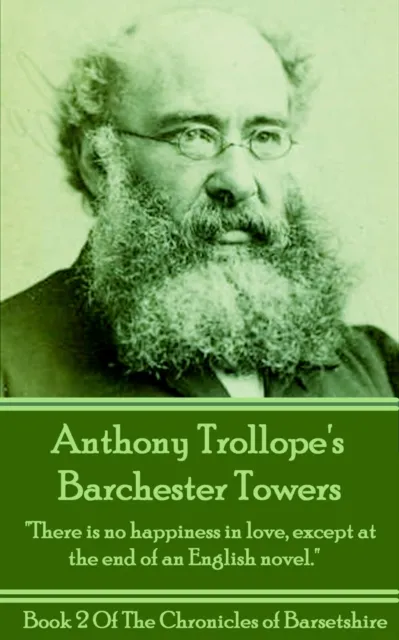
In 1851, he was sent to England to organise rural delivery in part of the country. He traveled extensively for two years. During this period, he began to nurture the first of the six Barsetshire novels, The Warden, which was published to encouraging sales in 1855. Two years later, also in the same series, the famed Barchester Towers was published. In 1859, he wanted to contribute short stories to the Cornhill magazine, edited by William Makepeace Thackeray. His novel Framley Parsonage was initially printed as a serial in the magazine and proved lucrative and reputation-building.
Later Career and Political Involvement
Wishing to move his writing career forward, he knew he should really be established back in England, preferably London. So in 1861, he sought and was appointed as Surveyor to the Eastern District, comprising Essex, Suffolk, Norfolk, Cambridgeshire, Huntingdonshire, and most of Hertfordshire. That same year, he moved to Waltham Cross, about 12 miles from London, where he lived until 1871. In 1868, he resigned from the Post Office to run for Parliament as a Liberal at Beverley in Yorkshire. Unfortunately, with vote-buying and other corrupt practices prevalent, he finished last of four candidates despite spending over £400 on the campaign. However, it shed light on the practices and helped to clean up national politics. Thereafter, he focused solely on writing.
Final Years and Legacy
In 1871, he visited Australia for a year to see his younger son. His ensuing book, though even-handed, gave way to resentment among many Australians, which still simmered on a return visit some years later. Shortly before his end, he returned again to Ireland to research his last and unfinished novel, The Landleaguers. In his prolific career, he had written 47 novels, as well as many short stories and travel books. On December 1882, he died in London and is buried at Kensal Green Cemetery in London.