£12.90
Victorian & Edwardian Dorset

Dorset in Victorian and Edwardian times
was (as now) a predominantly rural county, but one suffering from the agricultural depression. Rider Haggard reports (1901) on a long expedition across country meeting just four other vehicles. Three of them were brewers drays, and the fourth was a timberdrag.
The decay of agriculture was accompanied by the steady, century-long exodus from the country to the town, though by modern standards the streets of Victorian towns were relatively quiet and uncrowded (except on market-day, of course). Photographs of the period suggest a slowness of life and an emptiness which can seem attractive in our rather more hectic century.
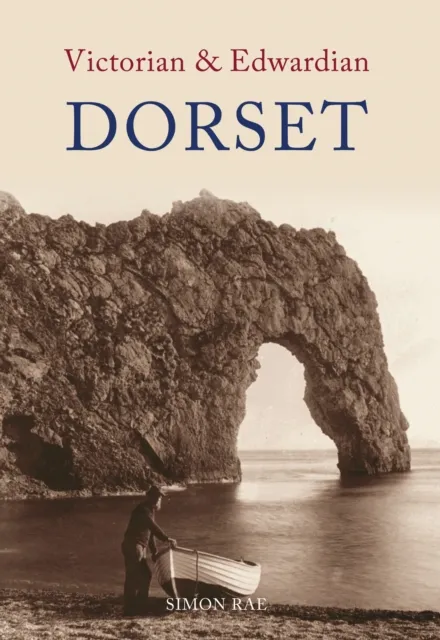
If land is one half of the Dorset equation, the sea is the other half. Dorset boasts the most interesting section of the south coast, with such extraordinary features as Stair Hole, Durdle Door and Lulworth Cove, and the pebble barrier of Chesil Beach. More orthodox geology created a string of beaches for the growing Victorian tourist trade, which flourished alongside the immemorial fishing industry.
Portland was home to the naval dockyards, and also several hundred prisoners whose exertions in the stone quarries were thought to be a fit subject for an astonishing variety of picture postcards. Further round the coast, the Swanage quarrymen hauled their huge bankers out of the bowels of the Isle of Purbeck, supplying the most durable stone for pavements and palaces as far away as London.
The Dorset coast, so rich in fossils, provided another source of income, Lyme Regis in particular being a notable centre. It goes without saying that the sea, though the basis of much of Dorset's economic activity, was no less treacherous than elsewhere, and the annals of the county include many a catastrophic shipwreck.
Here is a selection of a hundred and fifty photographs from that golden - or sepia - age, complemented by a variety of contemporary accounts drawn from a wide range of writers, from Dorset's most famous man of letters, Thomas Hardy, to the anonymous journalist on the Wareham & Isle of Purbeck Advertiser.