£159.50
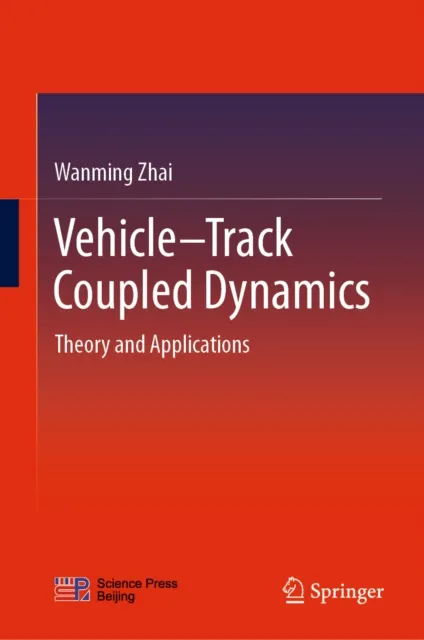
Vehicle-Track-Bridge System Subjected to Track Alignment
Dynamic Modeling and Applications

Introduction
This book delves into the dynamic issues of railway vehicles and track/bridge structures. This area has been a focus of railway engineering since the 1990s, driven by the speed-increasing of existing railway and the development of high-speed railway research in China.
The book critically examines the dynamical interactions within the railway vehicle-track-bridge system subjected to track alignment, transcending the limitations of traditional quasi-static methods and offering a novel perspective for analyzing track alignment design parameters with respect to safety and comfort.
Innovative Approach
Introducing a novel approach, this book applies railway vehicle-track/bridge system dynamics to track alignment studies, tackling unique challenges such as non-linear wheel-rail relationships and spatial geometric conditions of track curves.
It also addresses the challenge of long track lengths (typically spanning tens of kilometers) and presents innovative modeling and solution methods, making it a valuable reference in railway system dynamics.
Content and Applications
The content covers foundational dynamic principles, comprehensive modeling of railway vehicles, track, and bridge structures, and practical engineering applications.
Through detailed case studies, readers will gain insights into the real-world application and optimization of track alignment using dynamic evaluation methods.
Target Audience
Intended for researchers and practitioners with a background in railway engineering, this book bridges the gap between theoretical research and practical implementation. It is especially valuable for those involved in high-speed and heavy-haul railway projects.