£41.99
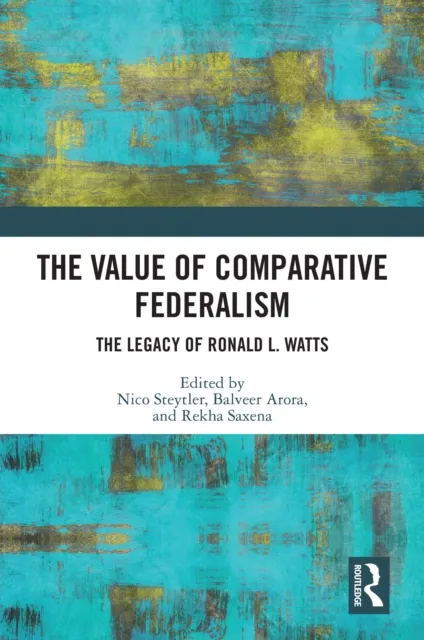
Value of Comparative Federalism
The Legacy of Ronald L. Watts

Book Overview
This book explores new avenues of international research in comparative federal studies. It re-examines the conceptual tools and methodologies for understanding federal systems, and the role of comparative federalism in the dissemination and implementation of federal concepts. It highlights the influence of comparative federalism on constitution-making as well as constitutional reforms.
Content and Perspectives
The volume provides innovative and pragmatic perspectives from both the Global North and the Global South, with case studies drawn from established federations such as India, Canada, Australia, and Austria, and emerging federal systems such as Italy and South Africa. Advocating a combined approach that integrates modern and traditional theoretical routes with practical insights and contemporary analyses, it discusses the issues of multilevel elections and federal governance; coalition governments and multiparty democracy in parliamentary federal systems, such as India; minority empowerment; gender budgeting; self-governance; multinational federalism; unitary states; the nation-state; and degenerating federalism. It also breaks new ground by looking at federalism from a gender perspective and deals with tools for measuring fiscal responsibility, and a social and cultural index.
Target Audience and Significance
A tribute to the intellectual legacy of Ronald L. Watts, this volume will be useful to scholars and researchers of political science, federalism, comparative federal studies, political studies, comparative politics, governance, public administration and law, development studies, South Asian studies, and Global South and North studies as well policymakers, international government bodies, research institutes, development experts, and other organisations working in the area.