£16.99
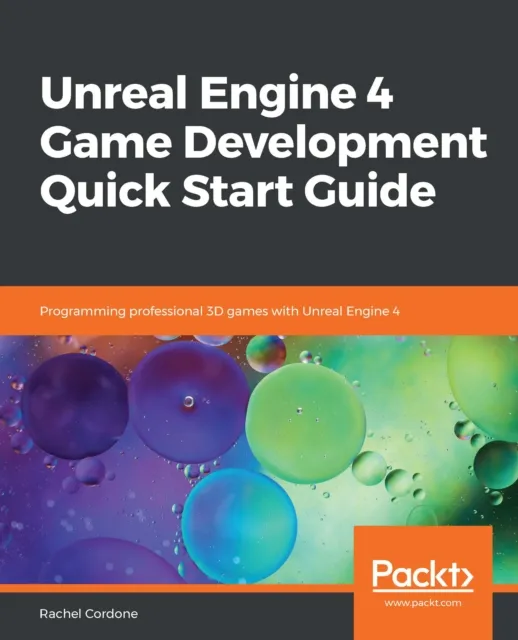
Unreal Engine 4 Game Development Quick Start Guide
Programming professional 3D games with Unreal Engine 4

Learn how to use Unreal Engine 4 by building 3D and multiplayer games using Blueprints
Key Features
Learn the fundamentals of Unreal Engine such as project templates, Blueprints, and C++
Learn to design games; use UMG to create menus and HUDs, and replication to create multiplayer games
Build dynamic game elements using Animation Blueprints and Behavior Trees
Book Description
Unreal Engine is a popular game engine for developers to build high-end 2D and 3D games. This book is a practical guide, starting off by quickly introducing you to the Unreal Engine 4 (UE4) ecosystem. You will learn how to create Blueprints and C++ code to define your game''s functionality. You will be familiarized with the core systems of UE4 such as UMG, Animation Blueprints, and Behavior Trees. You will also learn how to use replication to create multiplayer games. By the end of this book, you will have a broad, solid knowledge base to expand upon on your journey with UE4.
What you will learn
Use project templates to give your game a head start
Create custom Blueprints and C++ classes and extend from Epic''s base classes
Use UMG to create menus and HUDs for your game
Create more dynamic characters using Animation Blueprints
Learn how to create complex AI with Behavior Trees
Use replication to create multiplayer games
Optimize, test, and deploy a UE4 project
Who this book is for
Readers who already have some game development experience and Unity users who would like to try UE4 will all benefit from this book. Knowledge of basic Object-Oriented Programming topics such as variables, functions, and classes is assumed.