£38.99
Understanding Leadership
An Arts and Humanities Perspective

Introduction
Laozi, Marx, the Buddha, Ibsen, Machiavelli – these are just a few of the world’s great thinkers who have weighed in on the subject of leadership over the centuries. Yet the contemporary student of leadership often overlooks many of these names in favor of more recent theorists hailing from the social sciences. Understanding Leadership: An Arts and Humanities Perspective takes a different angle, employing the works of the great philosophers, authors, and artists found in world civilization and presenting an arts and humanities perspective on the study of leadership.
Conceptual Framework
The authors build their conceptual framework using their Five Components of Leadership Model, which recognizes the leader, the followers, the goal, the context, and the cultural values and norms that make up the leadership process.
Supporting Case Studies
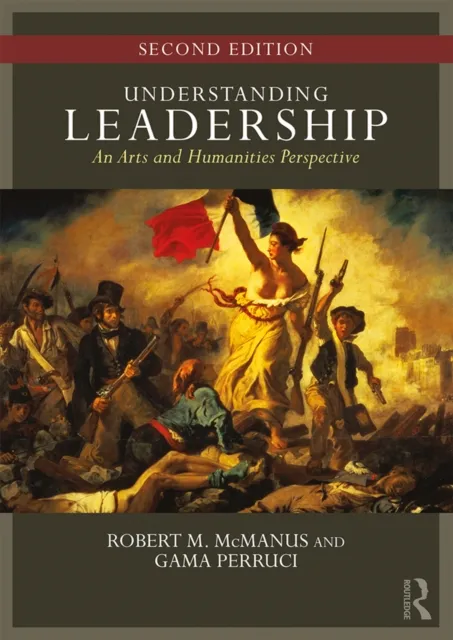
Supporting the text are a wealth of case studies that reflect on works such as Ayn Rand’s novella Anthem, Eugène Delacroix’s painting Liberty Leading the People, Charlie Chaplin’s film Modern Times, Athol Fugard’s play "Master Harold" . . . and the boys, Laozi’s poetic work Dao De Jing, and Antonín Dvořák’s New World Symphony. The authors also introduce studies from various world cultures to emphasize the role that cultural values and norms play in leadership. This illuminating framework promotes the multidimensional thinking that is necessary for understanding and problem-solving in a complex world.
Target Audience
Understanding Leadership: An Arts and Humanities Perspective will be a valuable resource for both undergraduate and postgraduate leadership students, while leadership professionals will also appreciate the book’s unique liberal arts and cultural approach.