£109.50
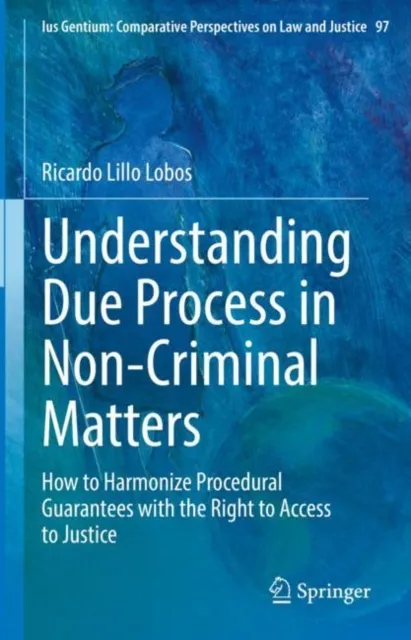
Understanding Due Process in Non-Criminal Matters
How to Harmonize Procedural Guarantees with the Right to Access to Justice

Understanding Procedural Due Process
How we understand what procedure is due as a fundamental or constitutional right can have a critical impact on designing a civil procedure. Drawing on comparative law and empirically oriented methodologies, in this book the author provides a thorough analysis of how procedural due process is understood both in national jurisdictions and in the field of international human rights law.
The book offers a suitable due process theory for civil matters in general, assessing the different roles that this basic international human right plays in comparison with criminal justice. In this regard, it argues that the civil justice conception of due process has grown under the shadow of criminal justice for too long.
Moreover, the theory answers the question of what the basic requirements are concerning the right to a fair trial on civil matters, i.e., the question of what we can and cannot sacrifice when designing a civil procedure that correctly distributes the risk of moralharm while remaining accessible to people with complex and simple legal needs, in order to reconcile the requirements of procedural fairness with social demands for justice.
This book makes a valuable contribution to the field of civil justice, legal design, and access to justice by providing an empirically based normative theory regarding the right to a fair trial. As such, it will be of interest to a broad audience: policymakers, practitioners and judges, but also researchers and scholars interested in theoretical questions in jurisprudence, and those familiar with empirical legal studies, comparative law, and other socio-legal studies.