£3.99
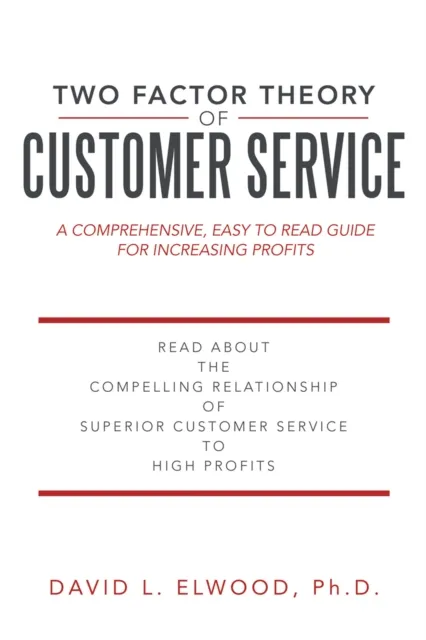
Two Factor Theory of Customer Service
A Comprehensive, Easy to Read Guide for Increasing Profits

In the Two Factor Theory of Customer Service
author David L. Elwood nudges the entire field of customer service toward becoming a professional discipline. Customer service is not a casual, do-it-if-you-think-of-it aspect of business; customer service is a real business product that stands beside the primary product of every business enterprise; it is inescapable and it is inextricably tied to profits. Elwood uses easy to follow ideas that open the door to fresh, persuasive perceptions of the fundamental dimensions of customer service events: accessible, emotional, temporal, informational, solutional, aptitudinal, and relational.
The Essence of Elwood's Message
The essence of Elwoods message is that the more clearly and deeply one understands customer service events, the more effective he or she will become at delivering customer service straight to the customer. And, as powerful, empirical research findings have shown, delivery of Superior Customer Service goes hand in hand with superior profits. The Two Factor Theory of Customer Service will delight everyone looking for a systematic approach to understanding and classifying the seemingly unending differences found in published examples of Superior Customer Service, and it will brighten the pathway for each provider seeking to increase profits.
Final Thoughts
Without question, you ARE in the customer service business --- the only question is whether you are doing it well. Want a quick read at the airport terminal that’ll entertain more than transform? Two Factor Theory of Customer Service isn’t it! Elwood skips the clichés while delivering a perfect balance of theory and immediate application that will change how you see your customers, and more importantly how your customers will see you (again and again and again...).
Jay Martinson, Ph.D.
Chair, Communications Department, Olivet Nazarene University