£74.50
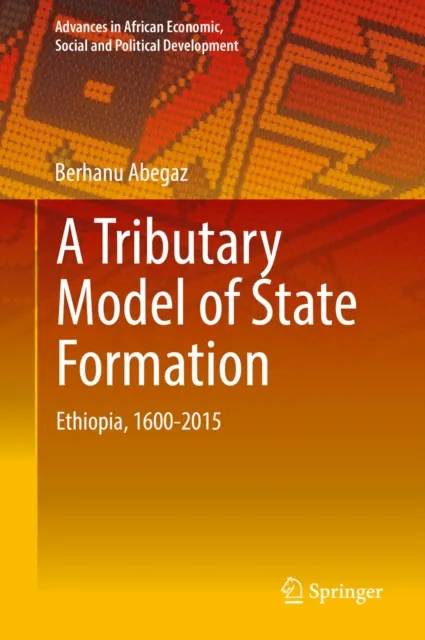
Tributary Model of State Formation
Ethiopia, 1600-2015

Introduction
A Tributary Model of State Formation: Ethiopia, 1600-2015 addresses the perplexing question of why a pedigreed Ethiopian state failed to transform itself into a nation-state. Using a comparative-institutionalist framework, this book explores why Ethiopia, an Afroasian civilizational state, has yet to build a modern political order comprising a sturdy state, the rule of law, and accountability to the ruled. The book provides a theoretical framework that contrasts the European and the Afroasian modes of state formation and explores the three major variants of the Ethiopian state since 1600 (Gondar, Shewa, and Revolutionary). It does this by employing the conceptual entry point of tributarism and teases out the implications of this perspective for refashioning the embattled postcolonial African political institutions. The primary contribution of the book is the novel framing of state formation through the lens of a landed Afroasiatic peasantry in giving rise to a fragile state whose redistributive preoccupation preempted the emergence of a productive economy to serve as a buoyant revenue base. Unlike feudal Europe, the dependence of the Afroasian state on arm’s-length overlordship rather than on tightly-managed landlordship incentivized endemic extractive contests among elites with the capacity for violence for the non-fixed tribute from independent wealth producers. Tributarism, I argue here, stymied the transition from a resilient statehood to a robust nation-statehood that befits an open-order society.
Target Audience
This book will be of interest to scholars in economics, political science, political economics, and African Studies.
Author
Berhanu Abegaz is Professor of Economics, College of William & Mary (USA).