£48.99
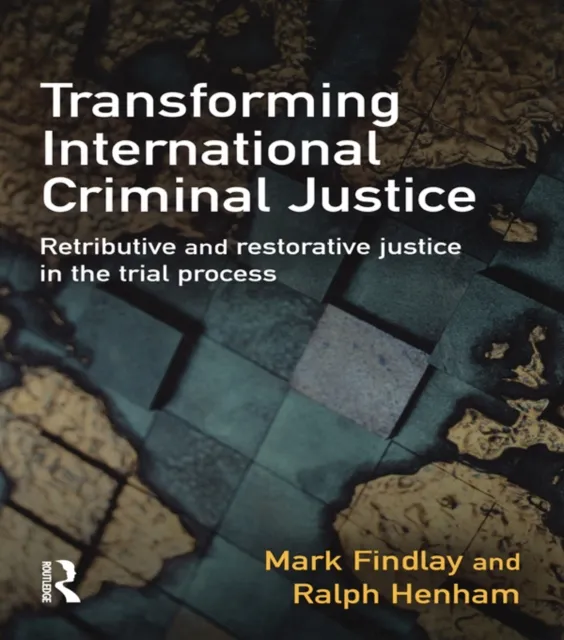
Transforming International Criminal Justice

Introduction
This book sets out an agenda to transform international criminal trials and the delivery of international criminal justice to victim communities through collaboration of currently competing paradigms. It reflects a transformation of thinking about the comparative analysis of the trial process, and seeks to advance the boundaries of international criminal justice through wider access and inclusivity in an environment of rights protection.
Collaborative Justice and Radical Dimensions
Collaborative justice is advanced as providing the future context of international criminal trials. The book's radical dimension is its argument for the harmonization of restorative and retributive justice within the international criminal trial.
Focus on the Trial Process
The focus is initially on the trial process, a key symbol of developing international styles of justice. It examines theoretical models and political applications of criminal justice through detailed empirical analysis, in order to explore the underlying relationship of theory and empirical study, applying the outcome in theory testing and policy evaluation in several different jurisdictions.
Comparative and Methodological Approaches
The book injects a significant comparative dimension into the study of international criminal justice. This is achieved through searching the traditional foundations of internationalism in justice by employing an original methodology to enable a multi-dimensional exploration of contexts (local, regional and global), so recognising the importance of difference within an agenda suggesting synthesis.
Rights Paradigm and Jurisdictional Descriptions
The book argues for a concept of international trial within a rights paradigm, understood against different procedural traditions and practices, and provides a detailed description of trials and trial decision-making in various jurisdictions.
Developing Research Strategies
Transforming International Criminal Justice also sets out to develop effective research strategies as part of its interrogation of specific trial narratives and meanings in contemporary legal cultures. Key themes are those of internationalisation, fair trial and the exercise of discretion in justice resolutions (sentencing in particular), and the lay/professional relationship and its dynamics.
Critique and Future Perspectives
Finally, the book provides a searching critique of the relevance of existing criminology and legal sociology in relation to international criminal justice, and speculates on trial transformation and the merger of retributive and restorative international criminal justice.