£95.00
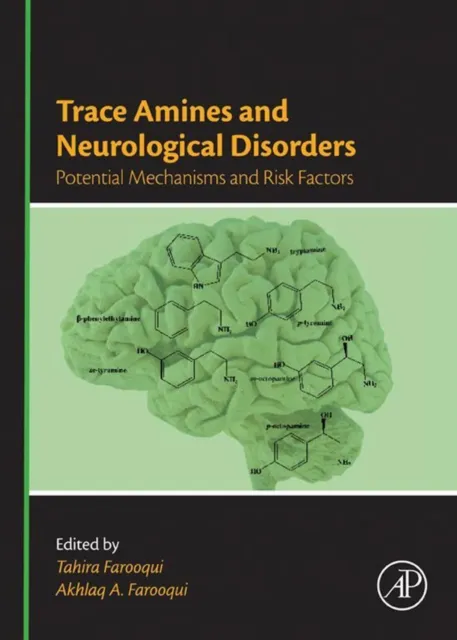
Trace Amines and Neurological Disorders
Potential Mechanisms and Risk Factors

Trace Amines and Neurological Disorders: Potential Mechanisms and Risk Factors
Explores trace amines which, under normal conditions, are present in the mammalian brain and peripheral nervous tissues at very low (nanomolar) concentrations. However, in a diverse array of human pathologies ranging from substance abuse, depression, attention deficit hyperactivity disorder, eating disorders, schizophrenia, and other neurological and neuropsychiatric diseases, the levels of trace amines are unusually high with an imbalance in their functions.
Furthermore, the rapid turnover of trace amines is evidenced by their dramatic increases following treatment with monoamine oxidase inhibitors (MAOI) or deletion of the MAO genes. This suggests that the concentration of trace amines may be considerably higher at neuronal synapses than predicted by steady-state measures, implicating some pathophysiological role. Therefore, understanding molecular mechanisms and developing selective agonists and antagonists for trace amine-associated receptors (TAARs) has become a good approach for treating these diseases.
Although the effects of trace amines at low physiological concentrations in mammalian species have been difficult to demonstrate, they may serve to maintain the neuronal activity of other monoamine neurotransmitters by possessing postsynaptic modulatory effects, particularly dopamine and serotonin, within defined physiological limits. Such an effect of trace amines makes them ideal candidates for the development of novel therapeutics for a wide range of human disorders.
This book presents up-to-date, cutting-edge, and comprehensive information on the link between trace amines and neurological disorders.
Highlights
Focuses on recent findings on trace amines, providing insights into the functional significance, molecular mechanisms, and biological relevance of TAARS in neurological disorders
Edited work with chapters authored by leaders in the field from around the globe, the broadest, most expert coverage available
Provides cutting-edge research on trace amines-mediated signaling in vertebrate model systems