£89.50
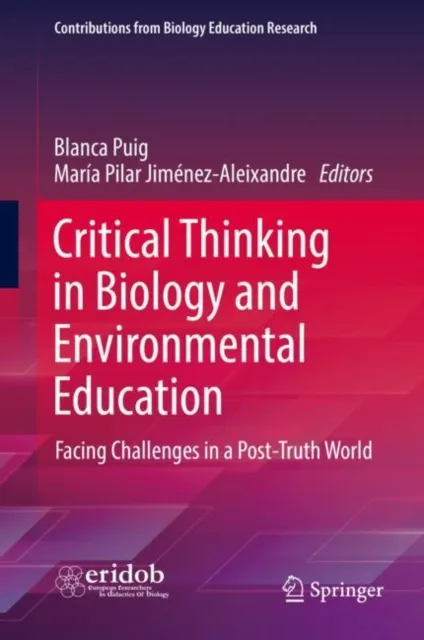
Towards Critical Environmental Education
Current and Future Perspectives

Theoretical, Philosophical, and Methodological Foundations
This volume discusses theory, philosophy, praxis and methods in Environmental and Ecological education, and considers the junction with the main visions and issues of Critical Pedagogy. The volume and its separate chapters address four axes, which can also be seen as the guidelines of the content as well as the central objectives of the book.
First Axis: Missing Theoretical and Practical Pieces
The first axis concerns the missing theoretical and practical pieces at this point in time. The volume considers the issues that are not included in contemporary Environmental Education, and thus, deprive it from critical orientations. This implies that in Environmental Education, very little discussion exists about the political, economic, racial, gender and class issues that in most cases govern the actions of leaders and stake-holders.
Second Axis: Current State and Directions
The second axis concerns what has been done so far and in what directions. This involves descriptions of theoretical approaches or actual applied methodologies in the classroom, such as curricula or syllabus used or the kind of actions certain educators have taken to infuse the issues of justice and critical reflection within the Environmental Education teaching agenda.
Third Axis: Proposals for Enrichment
The third axis examines proposals. It looks at ways to enrich domains of Environmental Education with the argumentations of Critical Pedagogy.
Fourth Axis: Implementation of Proposals
The fourth axis concerns the way in which proposals can be effectuated. This part contains specific methodologies and teaching sequences, depicting ways of including major aspects of Critical Pedagogy and Critical Education in Environmental Education. Examples are: Non-anthropocentric ecological approaches in the classroom, political activism in the Curricula, mixture of field activities and political activities.