£41.99
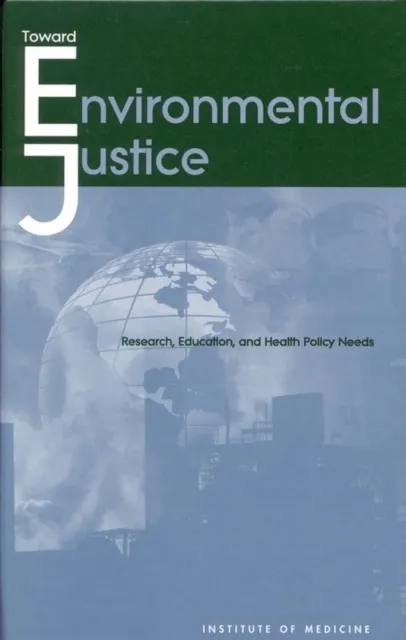
Toward Environmental Justice
Research, Education, and Health Policy Needs

Driven by community-based organizations and supported by a growing body of literature, the environmental justice movement contends that poor and minority populations are burdened with more than their share of toxic waste, pesticide runoff, and other hazardous byproducts of our modern economic life.
Is environmental degradation worse in poor and minority communities? Do these communities suffer more adverse health effects as a result? The committee addresses these questions and explores how current fragmentation in health policy could be replaced with greater coordination among federal, state, and local parties.
The book is highlighted with case studies from five locations where the committee traveled to hear citizen and researcher testimony. It offers detailed examinations in these areas:
Identifying environmental hazards and assessing risk for populations of varying ethnic, social, and economic backgrounds, and the need for methodologies that uniquely suit the populations at risk.
Identifying basic, clinical, and occupational research needs and meeting challenges to research on minorities.
Expanding environmental education from an ecological focus to a public health focus for all levels of health professionals.
Legal and ethical aspects of environmental health issues.
The book makes recommendations to decision-makers in the areas of public health, research, and education of health professionals and outlines health policy considerations.