£8.99
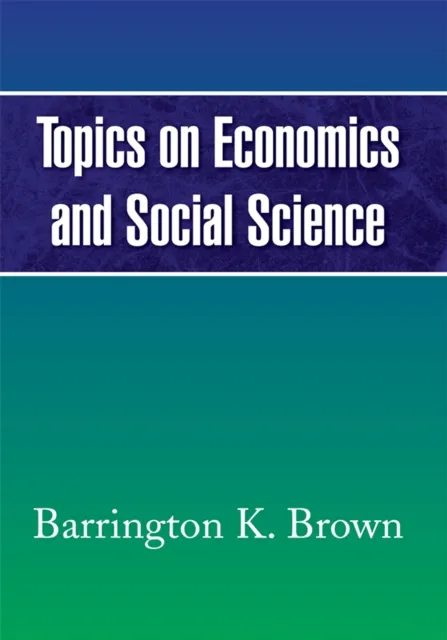
Topics on Economics and Social Science

Introduction
This manuscript consists of 16 research papers that were completed between the years 1982 and 2005, the analyses of which range from the purely theoretical, to the empirical, and extending to the more ideological and philosophical. In any case, the emphasis of each paper is upon creativity, with inventiveness and innovation being the essential elements.
Part Two
Part two of this manuscript consists of a purely theoretical paper. This paper presents a fresh approach to macroeconomic theory and policy.
Part Three
Part Three, consisting of empirically oriented projects, employs unique variable and model specifications in order to verify existing theories in economics. The first three papers, in this part, verify the theories of bilateral monopoly and the employment effects of minimum wage legislation under conditions of competition, monopsony, and monopoly. The next paper examines Caribbean economic integration and verifies the principle of comparative advantage. The fifth paper, in this part, examines the relationship between market structure and rates of return. The sixth paper, in this part, deals with the gaming industry.
Part Four
The fourth part of this manuscript deals with the more ideological and philosophical aspects of economics and social science. The first two papers, in this part, tend to emphasize laissez-faire capitalism. The third, and last, paper of this part, begins to break with this tendency, and, thus, serves as somewhat of an introduction to the fifth part of this manuscript.
Part Five
The fifth part of this manuscript is much more interdisciplinary in nature compared to the earlier parts and deals with class conflict and extends to conflict in general. The first paper presents the primary class conflict model and five additional papers follow. The fifth paper, while an empirical undertaking, is included here because it is consistent with the general topic of this part of the manuscript.