£41.99
Tools for Spatial Economic Planning
A Guide for Urbanizing Countries

Urbanization and Policy Challenges
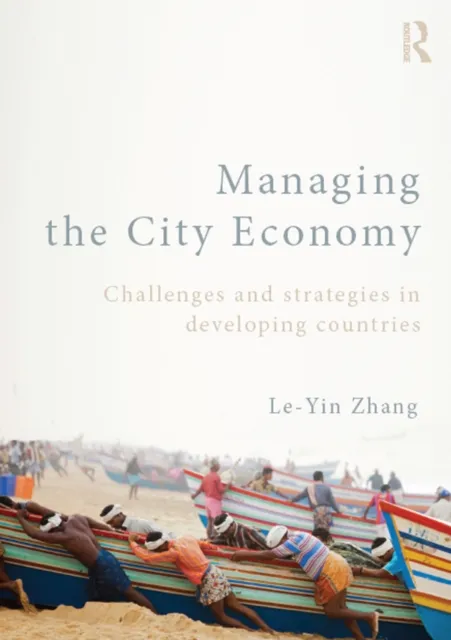
Urbanization is a transformative force reshaping the economies and societies of developing countries today. It has the potential to bring about powerful development dividends, but the rapid expansion of cities in countries where resources are limited is a pressing policy challenge. Guiding the evolving spatial and economic structure, and getting policy right is an urgent and high-stakes task.
Scope of the Book
This book bridges spatial and economic planning, offering practical tools for both analysis and policymaking. It explores seven national and subnational policy instruments - such as National Development Plans, city master plans, and special economic zones - detailing their purpose, formulation, key components, and effectiveness.
Analytical Tools and Methodologies
Additionally, it provides hands-on guidance on a wide variety of analytical tools, such as mapped overlays, location quotients, input-output analysis, multipliers, metrics of inequality and segregation, gravity models, and scenario planning. These tools can help identify spatial trends, assess linkages, and inform policy decisions.
Case Studies and Audience
With 26 case studies demonstrating real-world applications, this book serves as a resource for policymakers, development practitioners, and academics seeking to learn, develop the field of knowledge, and shape more effective spatial-economic policies.