£26.59
£37.99
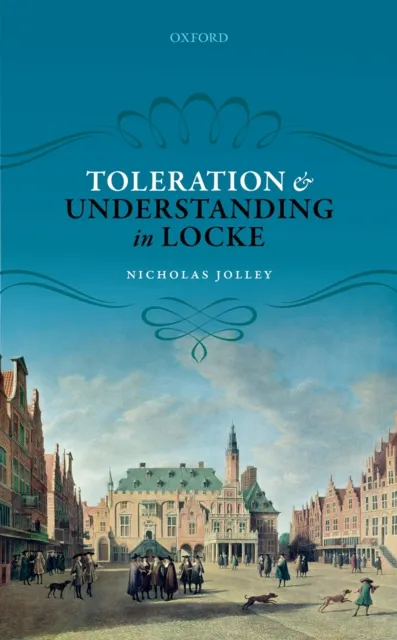
Toleration and Understanding in Locke

Despite recent advances in Locke scholarship
Philosophers and political theorists have paid little attention to the relations among his three greatest works: An Essay Concerning Human Understanding, Two Treatises of Government, and Epistola de Tolerantia. As a result, our picture of Locke's thought is a curiously fragmented one.
Toleration and Understanding in Locke
Argues that these works are unified by a concern to promote the cause of religious toleration. Making extensive use of Locke's neglected replies to Proast, Nicholas Jolley shows how Locke draws on his epistemological principles to criticize religious persecution — for Locke, since revelation is an object of belief, not knowledge, coercion by the state in religious matters is not morally justified.
Locke's Contractualist Approach
In this volume, Jolley also seeks to show how the Two Treatises of Government and the letters for toleration adopt the same contractualist approach to political theory; Locke argues for toleration from the function of the state where this is determined by the decisions of rational contracting parties.
Range of Locke's Arguments and Development
Throughout, attention is paid to demonstrating the range of Locke's arguments for toleration and to defending them, where possible, against recent criticisms. The book includes an account of the development of Locke's views about religious toleration from the beginning to the end of his career; it also includes discussions of his individualism about knowledge and belief, his critique of religious enthusiasm, his commitment to the minimal creed, and his teachings about natural law.
Locke as a Systematic Thinker
Locke emerges as a rather systematic thinker whose arguments are highly relevant to modern debates about religious toleration.