£144.00
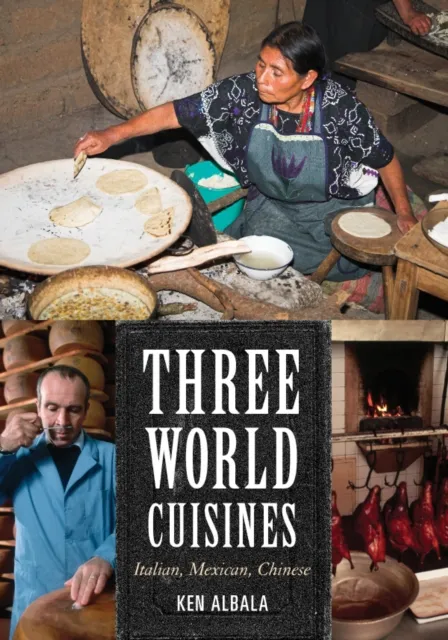
Three World Cuisines
Italian, Mexican, Chinese

Introduction
The text begins with a comprehensive theory of cuisine in the introduction and moves to the parallel culinary histories of Italy, Mexico, and China: the independent domestication of crops in each, the social, political, and technological developments that gave rise to each cuisine, and cooking in both professional and home settings. It also compares the internal logic of the cooking style and techniques in a way that will resonate with students.
Comparison of Cuisines
The meat of the text compares and contrasts the three cuisines in chapters on grains and starches; vegetables; fruits and nuts; meat, poultry, and dairy products; fish and shellfish; fats and flavorings, and beverages. Readers are taken on a fascinating journey of discovery, where the background story of mis-transmission, adaptation, and evolution of cooking as it spreads around the globe with trade and immigration is revealed.
Key Questions Explored
It answers the big questions, such as, why did the wok prevail in China, while the sautée pan and comal were used in Italy and Mexico, respectively? Why is bread baked in the Mediterranean but more often steamed in the Far East? How are certain ingredients used in completely different ways by different cultures and why? Why is corn transformed into tortillas and tamales in one place and into polenta in another? Why do we find tomato salsa in the Americas, long-cooked sauces in Italy, and tomatoes mixed with scrambled eggs in China?
Challenging Authenticity
Albala also challenges the notion of authenticity, providing ample evidence that cuisines are constantly evolving, adapting over time according to ingredients and cooking technologies.
Recipes and Inspiration
More than 150 of Albala’s recipes complete the instruction, inspiring readers to learn how to cook in a fundamental way.