£108.00
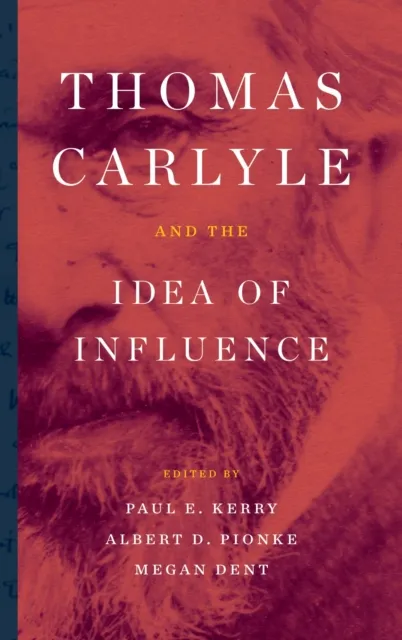
Thomas Carlyle and the Idea of Influence

Introduction
That Thomas Carlyle was influential in his own lifetime and continues to be so over 130 years after his death is a proposition with which few will disagree. His role as his generation’s foremost interpreter of German thought, his distinctive rhetorical style, his approach to history via the “innumerable biographies” of great men, and his almost unparalleled record of correspondence with contemporaries both great and small, makes him a necessary figure of study in multiple fields.
About the Book
Thomas Carlyle and the Idea of Influence positions Carlyle as an ideal representative figure through which to study that complex interplay between past and present most commonly referred to as influence. Approached from a theoretically ecumenical perspective by the volume's introduction and eighteen essays, influence is itself refigured through a number of complementary metaphorical frames: influence as organic inheritance; influence as aesthetic infection; influence as palimpsest; influence as mythology; influence as network; and more.
Contributors and Connections
Individual essays connect Carlyle with the persons and publications of Mathilde Blind, Orestes Brownson, John Bunyan, G. K. Chesterton, Benjamin Disraeli, George Eliot, T. S. Eliot, Ralph Waldo Emerson, Johann Wolfgang von Goethe, James Joyce, William Keenan, Windham Lewis, Jules Michelet, John Stuart Mill, Robert Owen, Spencer Stanhope, John Sterling, and others.
Conclusion
Considered as a whole, Thomas Carlyle and the Idea of Influence assembles a web of conceptual and intertextual connections that both challenges received understandings of influence itself and establishes a standard by which to measure future assertions of Carlyle's enduring intellectual legacy in the twenty-first century and beyond.