£69.99
£99.99
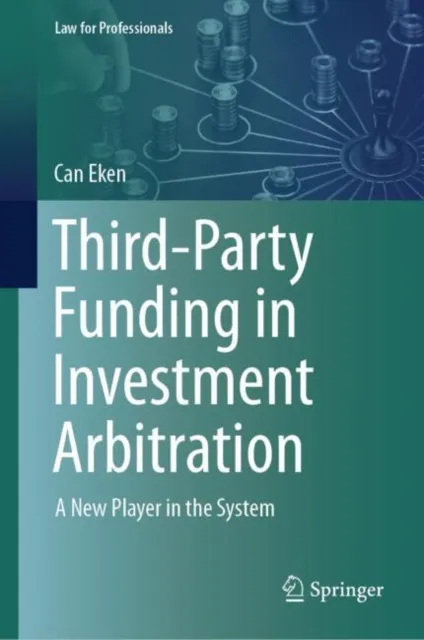
Third-Party Funding in Investment Arbitration
A New Player in the System

Introduction
This book offers a reference guide that can be consulted by all users of Third-Party Funding (TPF), lawyers, students, and other interested readers. In addition to analyzing TPF issues holistically, with both doctrinal and empirical methods, the book provides important empirical data on funders through interviews conducted with nearly thirty people working for third-party funders. It reveals a range of potential problems and lays out how to address them in the form of guidelines.
Significance of TPF
TPF has become a significant element of litigation and arbitration systems around the world for both theoretical and practical reasons. Specifically, in the context of investment arbitration, the latest studies suggest that a large percentage of investment arbitration cases are sponsored by funders. Despite its prevalence, TPF has raised procedural and ethical concerns in the investment regime.
Ethical and Procedural Concerns
One of the caveats is that when states lose against an investor, their taxpayers are who pay for the investment arbitration award, essentially transferring the wealth of the states to the investor, and now part of this wealth goes to the funder. Whether or not the funder shares this wealth is anyone’s guess and represents an ethical consideration. Apart from ethical challenges, TPF has also raised significant procedural problems in investment arbitration.
Impact on Investment Arbitration
As funders enter the equation of arbitration proceedings in the investment regime, consideration must be given to this new player and how TPF affects investment arbitration. Overall, the book assesses TPF in its entirety: background information, the main procedural issues and case law, ethical aspects, and empirical research on TPF, including the funder’s perspective. By doing so, it sheds new light on under-researched issues and offers essential guidance to help orient legal policy.