£42.99
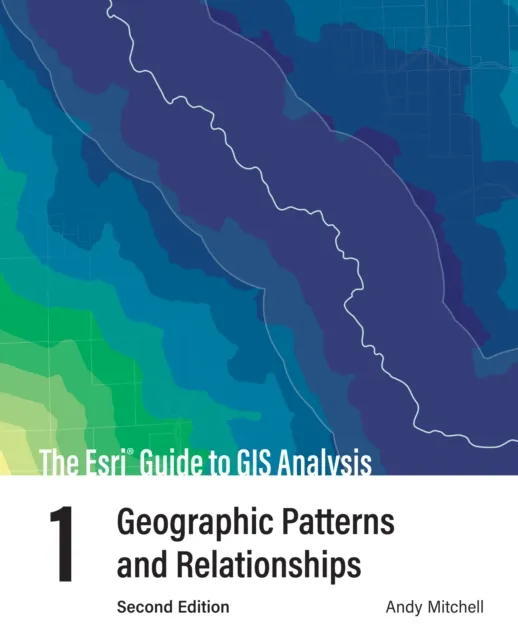
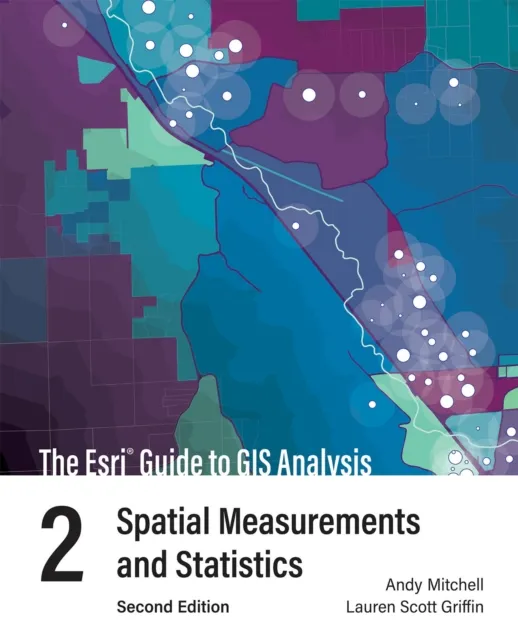
The Esri Guide to GIS Analysis, Volume 2
Spatial Measurements and Statistics

Learn how to get better answers in map analysis when you use spatial measurements and statistics.
Spatial measurements and statistics give you a powerful way to analyze geospatial data, but you don't need to understand complex mathematical theories to apply statistical tools and get meaningful results in your projects.
The Esri Guide to GIS Analysis, Volume 2: Spatial Measurements and Statistics, second edition, builds on Volume 1 by taking you to the next step of GIS analysis. Learn to answer such questions as, how are features distributed? What is the pattern created by a set of features? Where can clusters be found?
This book introduces readers to basic statistical concepts and some of the most common spatial statistics tasks: measuring distributions, identifying patterns and clusters, and analyzing relationships.
Updated with the latest and most useful software tools and revised explanations, each chapter in The Esri Guide to GIS Analysis, Volume 2 is organized to answer basic questions about the topic. Explore how spatial statistical tools can be applied in a range of disciplines, from public health to habitat conservation. Learn how to quantify patterns beyond visualizing them in maps. Examine spatial clusters through an updated chapter on identifying clusters.
Use The Esri Guide to GIS Analysis, Volume 2, second edition, to understand the statistical methods and tools that can move your work past mapping and visualization to more quantitative statistical assessment.