£5.39
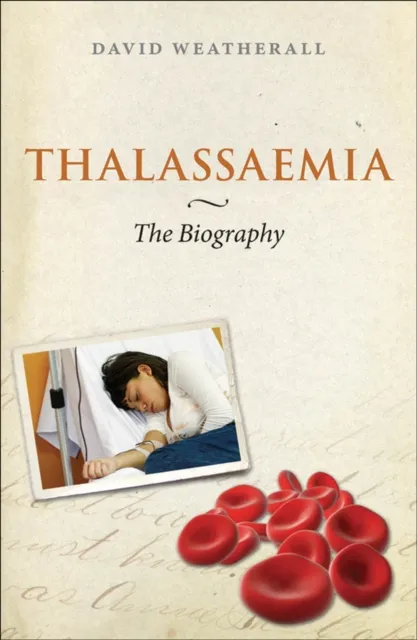
Thalassaemia: The Biography

Thalassaemia and Its Significance
Thalassaemia is the most common type of genetic disorder in the human population, and one of the first whose genetic basis was established. Written by Sir David Weatherall, an expert in molecular medicine and the founder of the Institute of Molecular Medicine in Oxford, this tells the story of early reports of the disease, historical accounts, the identification of the disease as having an inherited basis, early work on thalassaemia as a disorder of the synthesis of haemoglobin, and from the 1960s with the rise of molecular biology, the study of the condition at the DNA level.
Evolutionary Questions and Genetic Resistance
The commonality of the disease raised an important evolutionary question: if thalassaemia is a genetic disorder then why hasn''t it been selected out? Why does it persist, especially in Mediterranean populations? The great geneticist JBS Haldane suggested a reason - that carriers might be more resistant to malaria. Now that we have much more detailed understanding of the molecular basis of this set of diseases, has Haldane proved to be right? Weatherall shows that Haldane turns out to have been partially right.
Recent Advances and Impact on Medicine
The book ends with recent improvements in treatment that have transformed patients'' lives and a general assessment of how molecular approaches are impacting on medicine. Thalassaemia: the biography is part of the Oxford series, Biographies of Disease, edited by William and Helen Bynum. In each individual volume, an expert historian of medicine tells the story of a particular disease or condition throughout history - not only in terms of growing medical understanding of its nature and cure, but also shifting social and cultural attitudes, and changes in the meaning of the name of the disease itself.