£24.99
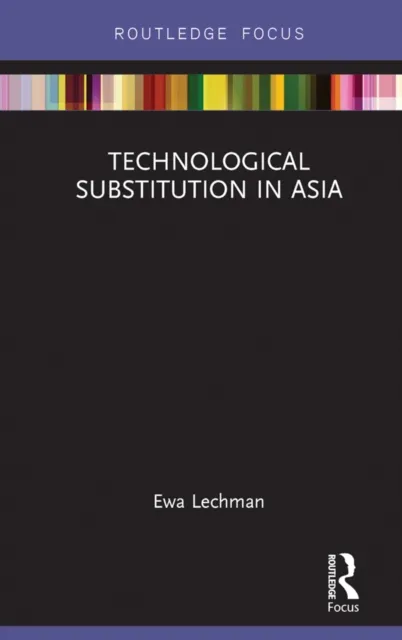
Technological Substitution in Asia

Introduction
Over last few decades, the world has witnessed, the process of rapid diffusion of new information and communication technologies (ICT) that enforced remarkable changes and structural shifts going far beyond economic sphere of life. ICT become fast available widespread and rapidly growing access to and use of ICT, additionally enhances the process of technological substitution, which consists in switching from the ‘old’ to ‘new’ technological solutions. The on-going digital revolution, undeniably, pervasively impacts and reshapes societies and economies, hence deserves special attention and interest.
Research Focus
This book provides extensive evidence on information and communication technologies development diffusion patterns, unveils specific ‘network effects’ that enhance rapid spread of ICT, and detect major macroeconomic determinants of this process, across 36 Asian economies over the period 1980-2015. Moreover, this research traces country-specific patterns of the unique process.
Technological Substitution Types
We consider two types of technological substitution, namely: ‘fixed-to-mobile’ type technological substitution process encompasses switching from fixed telephony (‘old technology’) to mobile telephony (‘new technology’); while the ‘fixed-to-wireless’ type technological substitution – switching from fixed (narrowband and/or broadband) fixed Internet networks (‘old technologies’) to wireless (mainly broadband) Internet networks (‘new technologies’).
Macroeconomic Factors
Moreover, this study empirically identifies the potential effect of selected macroeconomic factors, which may potentially enhance dynamic spread of ICT.