£45.00
Teaching for Global Community
Overcoming the Divide and Conquer Strategies of the Oppressor

Education and Community Resistance
Education has long been viewed as a vehicle for building community. However, the critical role of education and schools for constructing community resistance is undermined by recent trends toward the centralization of educational policy-making (e.g. racial profiling new laws in the US-Arizona and Texas; No Child Left Behind and global racism), the normalization of “globalization” as a vehicle for the advancement of economic neo-liberalism and social hegemony, and the commodification of schooling in the service of corporate capitalism.
Urgent Need for Alternative Visions
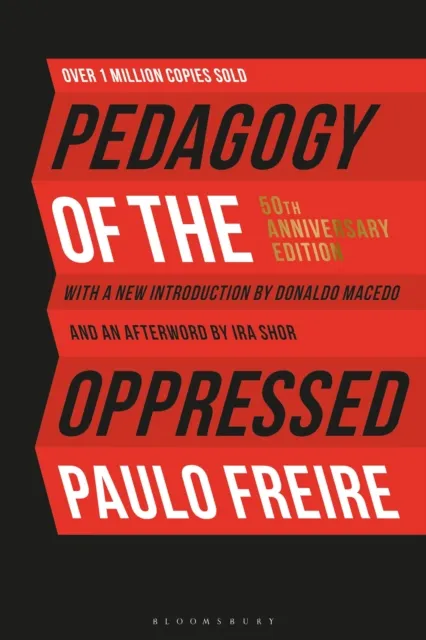
Alternative visions of schooling are urgently needed to transform these dangerous trends so as to reconstruct public education as an emancipatory social project. Teaching for Global Community: Overcoming the Divide and Conquer Strategies of the Oppressor examines these issues among related others as a way to honor and re-examine Freirean principles and aim to take critical pedagogy in new directions for a new generation.
Goals and Focus
The goal is to build upon past accomplishments of Paulo Freire's work and critical pedagogy while moving beyond its historical limitations. This includes efforts that revisit and re-evaluate established topics in the field or take on new areas of contestation. Issues related to education, labor, and emancipation, broadly defined and from diverse geographical context, are addressed.
Theoretical Perspectives
The theoretical perspectives used to look at these emerge from critical pedagogy, critical race theory, critiques of globalization and neoliberalism, marxist and neo-marxist perspectives, social constructivism, comparative/international education, postmodernism, indigenous perspectives, feminist theory, queer theory, poststructuralism, critical environmental studies, postcolonial studies, liberation theology, with a deep commitment to social justice.