£109.50
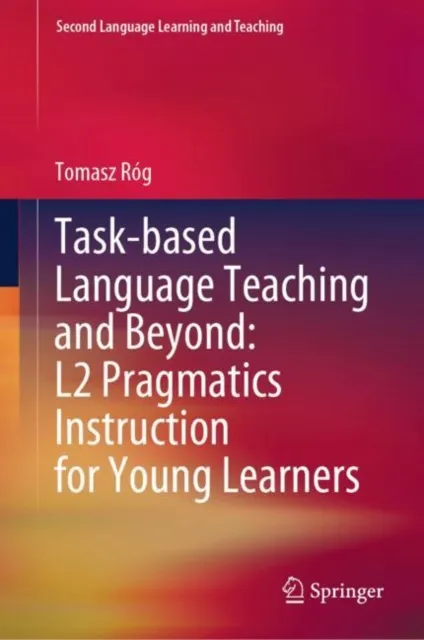
Task-based Language Teaching and Beyond: L2 Pragmatics Instruction for Young Learners

Introduction
This book provides a groundbreaking exploration of how task-based language teaching (TBLT) can effectively develop second language (L2) pragmatic competence in young learners. Bridging the gap between TBLT and L2 pragmatics, this volume addresses critical issues in language education, offering insights into teaching key speech acts. Specifically, it compares the outcomes of TBLT with the traditional PPP framework in teaching L2 speech acts to Polish learners of L2 English aged 8 to 9.
Chapter 1: Pragmatics and Pragmatic Competence
Chapter 1 deals with pragmatics and pragmatic competence, highlighting its importance in effective communication and language use in social contexts. It addresses L2 pragmatics, the development of L2 pragmatic competence, and the challenges in teaching and assessing this competence.
Chapter 2: Overview of TBLT
Chapter 2 overviews TBLT, its theoretical foundations, practical implementation, and related empirical research. It discusses the cognitive-interactionist and sociocultural perspectives on L2 acquisition and the effectiveness of tasks.
Chapter 3: Empirical Research on Using Tasks
Chapter 3 reviews empirical research on using tasks in teaching L2 pragmatics, especially to young learners.
Chapter 4: Research Methodology
Chapter 4 details the research methodology used in the study, including the context, participants, target speech acts, data elicitation instruments, and analysis procedures.
Chapter 5: Results
Chapter 5 presents the results of the study.
Chapter 6: Discussion and Implications
Chapter 6 discusses the findings, their pedagogical implications, and the limitations of the study.
Chapter 7: Conclusions
Chapter 7 offers conclusions.
Rich with pedagogical implications, the volume is an essential resource for researchers and practitioners interested in task-based and task-supported teaching, L2 pragmatics, and innovative approaches to teaching young learners.