£99.50
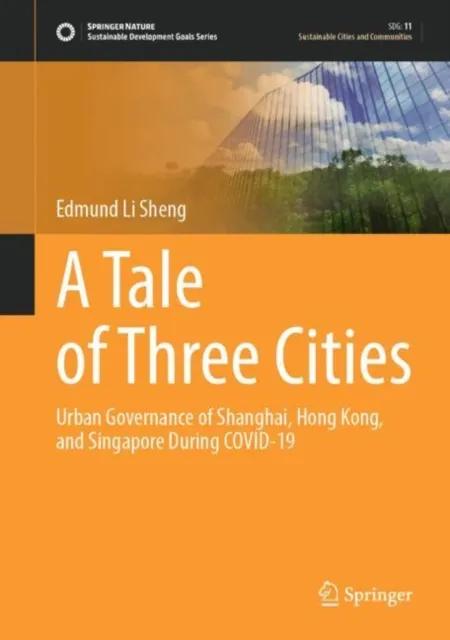
Tale of Three Cities
Urban Governance of Shanghai, Hong Kong, and Singapore During COVID-19

Overview
The proposed book presents the cutting-edge research on the urban development of three cities: Shanghai, Hong Kong, and Singapore. By comparing their responses to the COVID-19 pandemic from an international political economic perspective, this book examines the commonalities and differences in urban governance in these three widely recognized and well-developed Asian cities with outward-oriented economies through the lens of world-systems theory and related theories of historicism. These cities are all generally considered to be under authoritarian regimes, but there are substantial differences in their social systems, rules of law and justice, and administrative structures.
Globalization and Urban Development
In the context of globalization, the cities are competing on a more even playing field. In addition, city governments worldwide are increasingly pursuing growth, land markets, urban regeneration, and large-scale public projects. With the advent of globalization, urban development is gradually changing from the past crude model of spatial expansion and land finance to a more refined model of socioeconomic development driven by industrial upgrading and enhanced consumption. However, cities’ political and economic contexts and governance systems vary greatly. Unsurprisingly, given their differences, the three cities of Shanghai, Hong Kong, and Singapore demonstrated varied responses to the COVID-19 pandemic. This book discusses the efforts of these governments to address and reduce the spread of COVID-19 as well as how national responses to the pandemic outbreak were influenced by global dynamics, geopolitics, and each nation’s particular historical context.