£109.99
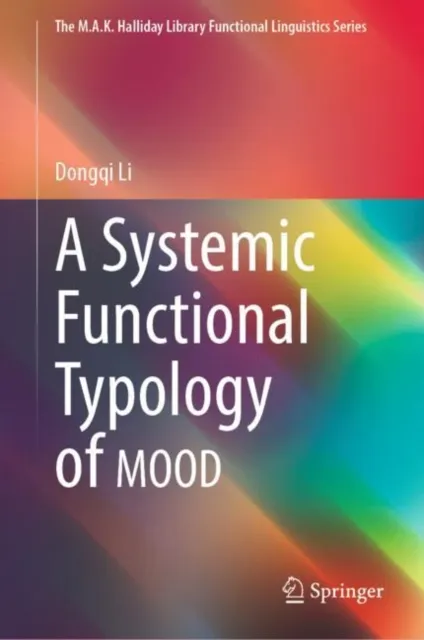
Systemic Functional Typology of MOOD

Introduction
The grammatical category of (sentence) mood has been of central interest to many branches of linguistics, including linguistic typology and systemic functional linguistics. This book is a successful integration of the typological and systemic functional approaches to mood, aiming to investigate the commonalities and variations across languages in both mood system and mood structure.
Scope and Methodology
To this aim, it establishes a geographically, genetically and typologically representative sample of 60 languages and provides detailed systemic functional descriptions of the mood system and mood structure of these languages. Based on such descriptions, it makes cross-linguistic comparisons of the mood system and mood structure of the languages in the sample.
Structural Exploration
Structurally, it explores the cross-linguistic commonalities and variations in (i) the realizations of some major functional elements in mood structure, (ii) the realizations of mood options and (iii) the realizations of mood system. Systemically, it investigates how languages resemble and vary from each other in (i) the subtypes of major mood types, (ii) the organization of mood system and (iii) the semantic dimensions along which mood system is elaborated further in delicacy.
Generalizations and Contributions
Moreover, building on the descriptions and comparisons, it makes some generalizations about the structural and systemic features of mood and proposes some tentative explanations for the commonalities and variations languages display in mood system and mood structure. This book is an empirical and holistic approach to the typology of mood and contributes to a deeper understanding of the grammatical category. It is of special interest to systemic functional linguists, typologists, grammarians and descriptive linguists.