£2.99
Synchronicity
Nature and Psyche in an Interconnected Universe

Also available in an open-access, full-text edition at http://txspace.tamu.edu/bitstream/handle/1969.1/88024/Cambray_Synchronicity_9781603441438_txt.pdf?sequence=4
Introduction to Synchronicity
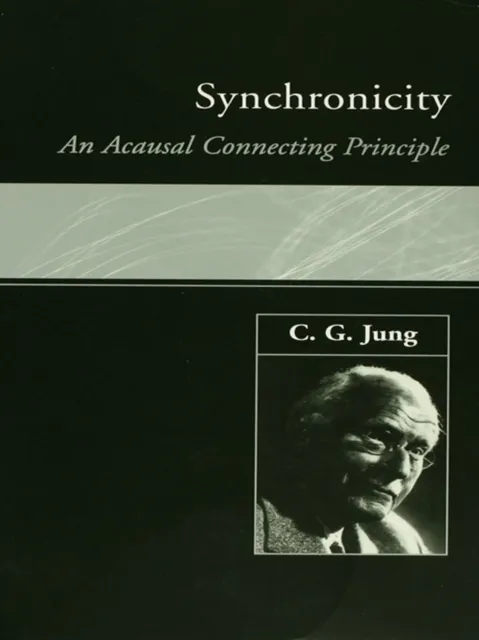
In 1952 C. G. Jung published a paradoxical hypothesis on synchronicity that marked an attempt to expand the western world’s conception of the relationship between nature and the psyche. Jung’s hypothesis sought to break down the polarizing cause-effect assessment of the world and psyche, suggesting that everything is interconnected. Thus, synchronicity is both "a meaningful event" and "an acausal connecting principle." Evaluating the world in this manner opened the door to "exploring the possibility of meaning in chance or random events, deciphering if and when meaning might be present even if outside conscious awareness."
Contemporary Perspectives and Cambray's Contribution
Now, after contextualizing Jung’s work in relation to contemporary scientific advancements such as relativity and quantum theories, Joseph Cambray explores in this book how Jung’s theories, practices, and clinical methods influenced the current field of complexity theory, which works with a paradox similar to Jung’s synchronicity: the importance of symmetry as well as the need to break that symmetry for "emergence" to occur. Finally, Cambray provides his unique contribution to the field by attempting to trace "cultural synchronicities," a reconsideration of historical events in terms of their synchronistic aspects. For example, he examines the emergence of democracy in ancient Greece in order "to find a model of group decision making based on emergentist principles with a synchronistic core."