£155.00
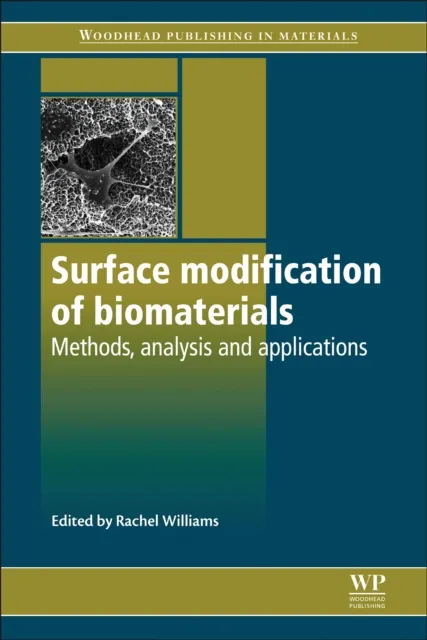
Surface Modification of Biomaterials
Methods Analysis and Applications

Introduction
The surface modification of biomaterials plays a significant role in determining the outcome of biological-material interactions. With the appropriate modification, a material's surface can be tailored to improve biocompatibility, adhesion, and cell interactions. Consequently, surface modification is vital in the development and design of new biomaterials and medical devices.
Overview of Surface Modifications
Surface modification of biomaterials reviews both established surface modifications and those still in the early stages of research. It discusses how they can be used to optimise biological interactions and enhance clinical performance.
Techniques of Surface Modification
Part one begins with chapters looking at various types and techniques of surface modification including plasma polymerisation, covalent binding of poly (ethylene glycol) (PEG), heparinisation, peptide functionalisation, and calcium phosphate deposition. It then examines metal surface oxidation and biomaterial surface topography to control cellular response, with particular reference to technologies, cell behaviour, and biomedical applications.
Analytical Techniques and Applications
Part two studies the analytical techniques and applications of surface modification, with chapters on analysing biomaterial surface chemistry, surface structure, morphology, and topography. It also discusses modifying biomaterial surfaces to optimise interactions with blood, control infection, and enhance interactions with soft tissues.
Applications in Regeneration and Interaction Control
The book covers repairing and regenerating nerve cells, controlling stem cell growth and differentiation, and optimising interactions with bone.
Additional Insights
The distinguished editor and international team of contributors have produced a unique overview and detailed chapters on a range of surface modification techniques. This resource is valuable for biomaterials researchers, scientists, and engineers concerned with improving biomaterial properties. It is also beneficial for academics researching surface modification.
- Reviews both established surface modifications and those still in the early stages of research and how they can be used to optimise biological interactions and enhance clinical performance.
- Studies analytical techniques and applications of surface modification with chapters assessing biomaterial surface chemistry, surface structure, morphology, and topography.
- Discusses modifying biomaterial surfaces to optimise interactions with blood and soft tissues, as well as repairing and regenerating nerve cells and controlling infection.