£89.50
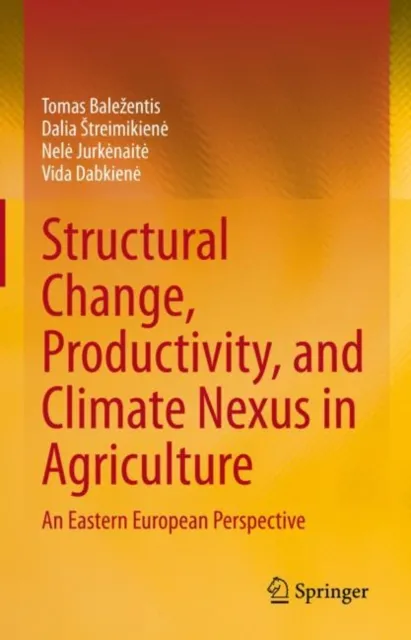
Structural Change, Productivity, and Climate Nexus in Agriculture
An Eastern European Perspective

Introduction
This monograph addresses the methodological and empirical issues relevant for the development of sustainable agriculture, with a particular focus on Eastern Europe. It relates economic growth to the other dimensions of sustainability by applying integrated methods. The book comprises five chapters dedicated to the theoretical approaches towards sustainable rural development, productivity analysis, structural change analysis and environmental footprint.
Focus and Methodologies
The book focuses on the transformations of the agricultural sector while taking into account economic, environmental, and social dynamics. The importance of agricultural transformations to the livelihood of the rural population and food security are highlighted. Further, advanced methodologies and frameworks are presented to fathom the underlying trends in different facets of agricultural production. The authors present statistical methods used for the analysis of agricultural sustainability along with applications for agriculture in the European Union. Additionally, they discuss the measures of efficiency, methodological approaches and empirical models. Finally, the book applies econometric and optimization techniques, which are useful for the estimation of the production functions and other representations of technology in the case of the European Union member states.
Conclusion
Therefore, the book is a must-read for researchers and students of agricultural and production economics, as well as policy-makers and academia in general.