£179.50
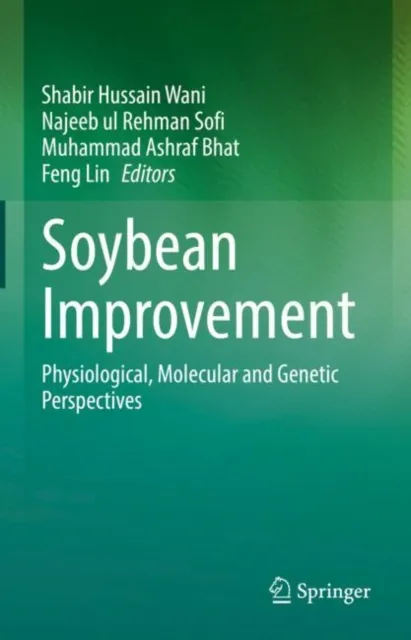
Soybean Improvement
Physiological, Molecular and Genetic Perspectives

Introduction to Soybean
Soybean (Glycine max L. (Merr)) is one of the most important crops worldwide. Soybean seeds are vital for both protein meal and vegetable oil. Soybean was domesticated in China, and since last 4-5 decades it has become one of the most widely grown crops around the globe. The crop is grown on an anticipated 6% of the world’s arable land, and since the 1970s, the area in soybean production has the highest percentage increase compared to any other major crop. It is a major crop in the United States, Brazil, China and Argentina and important in many other countries.
The cultivated soybean has one wild annual relative, G. soja, and 23 wild perennial relatives. Soybean has spread to many Asian countries two to three thousand years ago, but was not known in the West until the 18th century.
Constraints and Breeding Efforts
Among the various constraints responsible for decrease in soybean yields are the biotic and abiotic stresses which have recently increased as a result of changing climatic scenarios at global level. Alot of work has been done for cultivar development and germplasm enhancement through conventional plant breeding. This has resulted in development of numerous high yielding and climate resilient soybean varieties.
Despite of this development, plant breeding is long-term by nature, resource dependent and climate dependent. Due to the advancement in genomics and phenomics, significant insights have been gained in the identification of genes for yield improvement, tolerance to biotic and abiotic stress and increased quality parameters in soybean.
Genomic and Molecular Advances
Molecular breeding has become routine and with the advent of next generation sequencing technologies resulting in SNP based molecular markers, soybean improvement has taken a new dimension and resulted in mapping of genes for various traits that include disease resistance, insect resistance, high oil content and improved yield.
Book Overview
This book includes chapters from renowned potential soybean scientists to discuss the latest updates on soybean molecular and genetic perspectives to elucidate the complex mechanisms to develop biotic and abiotic stress resilience in soybean. Recent studies on the improvement of oil quality and yield in soybean have also been incorporated.