£46.19
£65.99
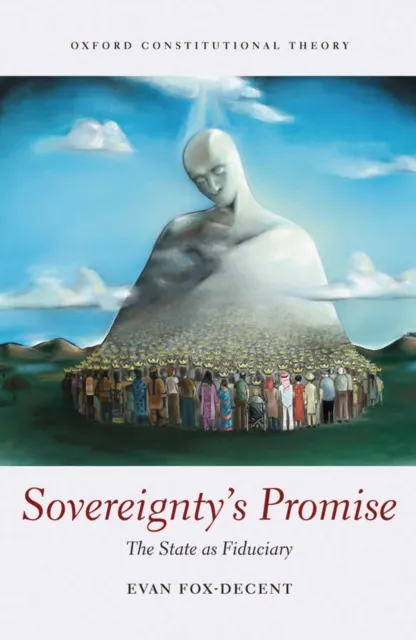
Sovereignty's Promise
The State as Fiduciary

Political and Public Law
Political theory is traditionally concerned with the justification and limits of state power. It asks: Can states legitimately direct and coerce non-consenting subjects? If they can, what limits, if any, constrain sovereign power?
Public law is concerned with the justification and limits of judicial power. It asks: On what grounds can judges "read down" or "read in" statutory language against the apparent intention of the legislature? What limits, if any, are appropriate to these exercises of judicial power?
Overview of the Book
This book develops an original constitutional theory of political authority that yields novel answers to both sets of questions. Fox-Decent argues that the state is a fiduciary of its people, and that this fiduciary relationship grounds the state's authority to announce and enforce law. The fiduciary state is conceived of as a public agent of necessity charged with guaranteeing a regime of secure and equal freedom.
Whereas the social contract tradition struggles to ground authority on consent, the fiduciary theory explains authority with reference to the state's fiduciary obligation to respect legal principles constitutive of the rule of law. This obligation arises from the state's possession of irresistible public powers.
Methodology and Structure
The author begins with a discussion of Hobbes's conception of legality and the problem of discretionary power in administrative law. Drawing on Kant, he sketches a theory of fiduciary relations, and develops the argument through three parts.
Part I shows that it is possible for the state to stand in a public fiduciary relationship to its people through a discussion of Crown-Native fiduciary relations recognized by Canadian courts. Part II sets out the theoretical underpinnings of the fiduciary theory of the state. Part III explores the implications of the fiduciary theory for administrative law and common law constitutionalism. The final chapter situates the theory within a broader philosophical discussion of the rule of law.