£149.50
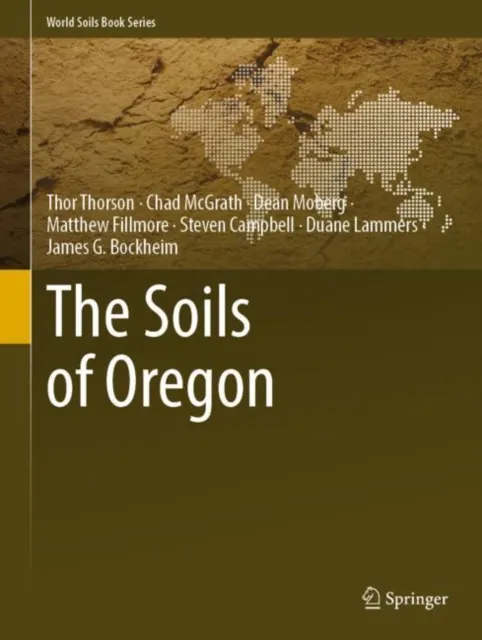
Soils of Oregon

Summary
This book is the only comprehensive summary of natural resources of Oregon and adds to World Soil Book Series state-level collection. Due to broad latitudinal and elevation differences, Oregon has an exceptionally diverse climate, which exerts a major influence on soil formation. The mean annual temperature in Oregon ranges from 0°C in the Wallowa and Blue Mountains of northeastern Oregon to 13 °C in south-central Oregon. The mean annual precipitation ranges from 175 mm in southeastern Oregon to over 5,000 mm at higher elevations in the Coast Range. The dominant vegetation type in Oregon is temperate shrublands, followed by forests dominated by lodgepole pine, Douglas-fir, and mixed conifers, grasslands, subalpine forests, maritime Sitka spruce-western hemlock forests, and ponderosa pine-dominated forests.
Land Resources
Oregon is divided into 17 Major Land Resource Areas, the largest of which include the Malheur High Plateau, the Cascade Mountains, the Blue Mountain Foothills, and Blue Mountains. The single most important geologic event in Oregon was the deposition of Mazama ash 7,700 years by the explosion of Mt. Mazama. Oregon has soil series representative of 10 orders, 40 suborders, 114 great groups, 389 subgroups, over 1,000 families, and over 1,700 soil series. Mollisols are the dominant order in Oregon, followed by Aridisols, Inceptisols, Andisols, Ultisols, and Alfisols. Soils in Oregon are used primarily for forest products, livestock grazing, agricultural crops, and wildlife management. Key land use issues in Oregon are climate change; wetland loss; flooding; landslides; volcanoes, earthquakes, and tsunamis; coastal erosion; and wildfires.