£152.00
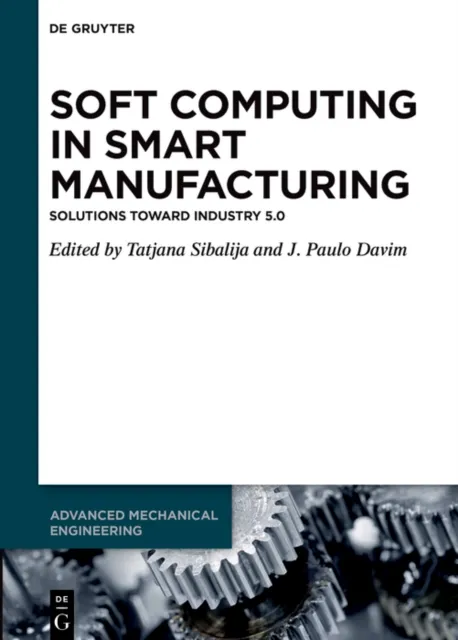
Soft Computing in Smart Manufacturing
Solutions toward Industry 5.0

Introduction
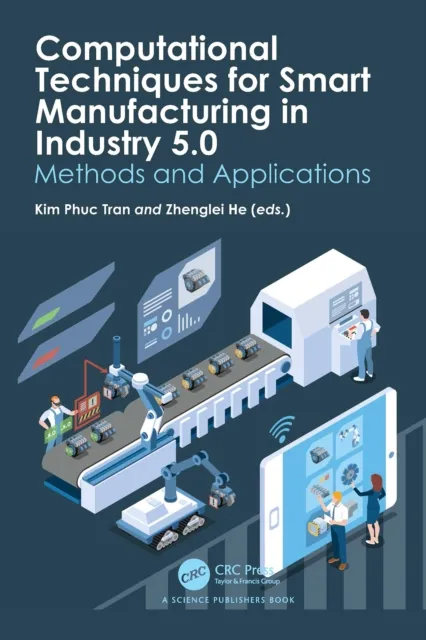
This book aims at addressing the challenges of contemporary manufacturing in Industry 4.0 environment and future manufacturing (aka Industry 5.0), by implementing soft computing as one of the major sub-fields of artificial intelligence. It contributes to development and application of the soft computing systems, including links to hardware, software and enterprise systems, in resolving modern manufacturing issues in complex, highly dynamic and globalized industrial circumstances. It embraces heterogeneous complementary aspects, such as control, monitoring and modeling of different manufacturing tasks, including intelligent robotic systems and processes, addressed by various machine learning and fuzzy techniques; modeling and parametric optimization of advanced conventional and non-conventional, eco-friendly manufacturing processes by using machine learning and evolutionary computing techniques; cybersecurity framework for Internet of Things-based systems addressing trustworthiness and resilience in machine-to-machine and human-machine collaboration; static and dynamic digital twins integration and synchronization in a smart factory environment; STEP-NC technology for a smart machine vision system, and integration of Open CNC with Service-Oriented Architecture for STEP-NC monitoring system in a smart manufacturing.
Areas of Interest
Areas of interest include but are not limited to applications of soft computing to address the following:
- dynamic process/system modeling and simulation,
- dynamic process/system parametric optimization,
- dynamic planning and scheduling,
- smart, predictive maintenance,
- intelligent and autonomous systems,
- improved machine cognition,
- effective digital twins integration,
- human-machine collaboration, robots, and cobots.