£47.59
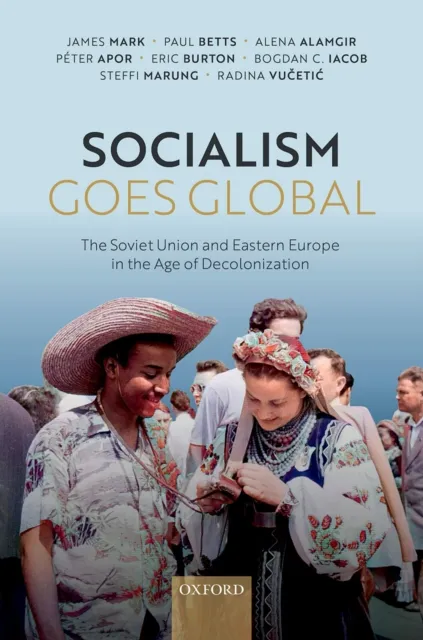
Socialism Goes Global
The Soviet Union and Eastern Europe in the Age of Decolonisation

Introduction
This collectively written monograph is the first work to provide a broad history of the relationship between Eastern Europe and the decolonising world. It ranges from the late nineteenth to the late twentieth century, but at its core is the dynamic of the post-1945 period, when socialism's importance as a globalising force accelerated and drew together what contemporaries called the Second and Third Worlds.
Central Themes
At the centre of this history is the encounter between the Soviet Union and Eastern Europe on one hand, and a wider world casting off European empires or struggling against western imperialism on the other. The origins of these connections are traced back to new forms of internationalism enabled by the Russian Revolution; the interplay between the first decolonisation of the twentieth century in Eastern Europe and rising anti-colonial movements; and the global rise of fascism, which created new connections between East and South.
Focus on the Cold War
The heart of the book, however, lies in the Cold War, when these contacts and relationships dramatically intensified. A common embrace of socialist modernisation and anti-imperial culture opened up possibilities for a new and meaningful exchange between the peripheries of Eastern Europe, Latin America, Africa and Asia.
Fields and People
Such linkages are examined across many different fields - from health to archaeology, economic development to the arts - and through many people - from students to experts to labour migrants - who all helped to shape a different form and meaning of globalisation.