£24.00
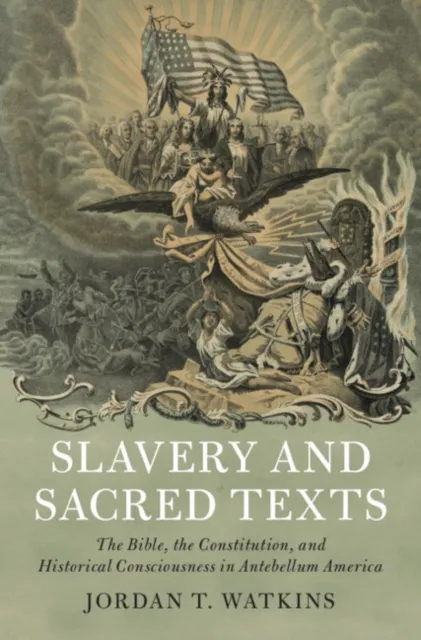
Slavery and Sacred Texts
The Bible, the Constitution, and Historical Consciousness in Antebellum America

Historical Context and Religious Texts
In the decades before the Civil War, Americans appealed to the nation's sacred religious and legal texts - the Bible and the Constitution - to address the slavery crisis. The ensuing political debates over slavery deepened interpreters' emphasis on historical readings of the sacred texts, and in turn, these readings began to highlight the unbridgeable historical distances that separated nineteenth-century Americans from biblical and founding pasts.
Different Interpretations and Key Figures
While many Americans continued to adhere to a belief in the Bible's timeless teachings and the Constitution's enduring principles, some antislavery readers, including Theodore Parker, Frederick Douglass, and Abraham Lincoln, used historical distance to reinterpret and use the sacred texts as antislavery documents.
Development of American Historical Consciousness
By using the debate over American slavery as a case study, Jordan T. Watkins traces the development of American historical consciousness in antebellum America, showing how a growing emphasis on historical readings of the Bible and the Constitution gave rise to a sense of historical distance.