£48.99
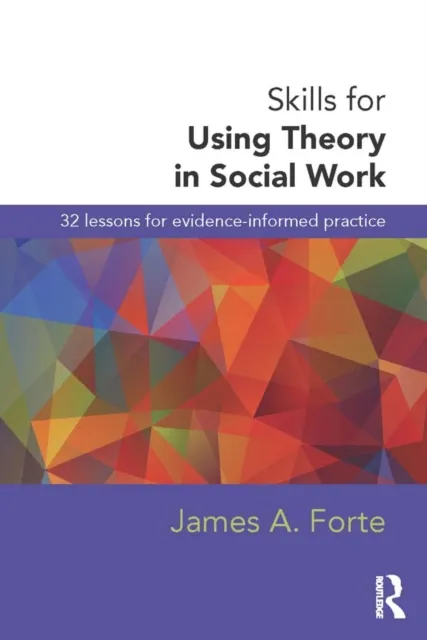
Skills for Using Theory in Social Work
32 Lessons for Evidence-Informed Practice

Using theory, research evidence and experiential knowledge is a critical component of good social work. This unique text is designed to help social work students and practitioners to integrate theorizing into practice, demonstrating how to search for, select and translate academic knowledge for practical use in helping people improve their lives and environments.
Presenting 32 core skills, Skills for Using Theory in Social Work provides a conceptual foundation, a vocabulary, and a set of skills to aid competent social work theorizing. Each chapter outlines the knowledge and action components of the skill and its relationship to core practice behaviours, along with learning and reflection activities. The lessons are divided into four parts:
Section one
discusses foundational material, including self-identification as a theorist-practitioner, the deliberate use of the term theory, and a social work approach to the selection of knowledge.
Section two
focuses on the adept use of theorizing skills. It covers identifying assumptions, using concepts, formulating propositions, organizing theory elements inductively or deductively, summarizing and displaying the elements of a theory, gathering and organizing assessment information and communicating with clients and colleagues about tentative theories.
Section three
includes lessons preparing social workers for the construction of useful middle-range theories including causal theories and interpretive theories and for testing and sharing these practical theories.
Section four
presents skills to develop critical thinking about theoretical knowledge. These include avoiding the misuse of theory, judging a theory using scientific standards, judging a theory by professional standards, critiquing theory in its cultural and historical context and making judgments about the likely long-term impact of a theory.
This key text will help readers to demonstrate their expertise in reflective, competent, and theory-informed practice. It is suitable for all social work students and practitioners, particularly those taking practice, theory and human behaviour in the social environment courses.