£45.99
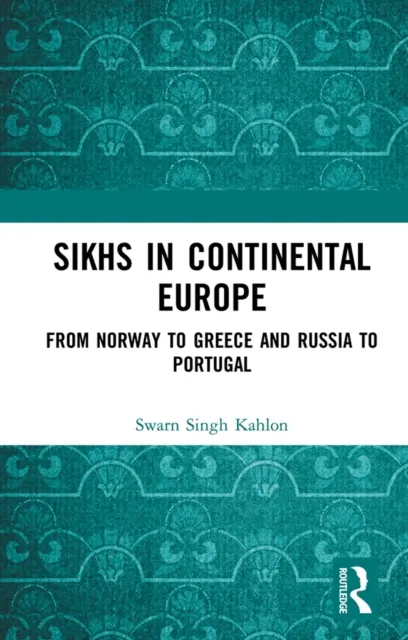
Sikhs in Continental Europe
From Norway to Greece and Russia to Portugal

This book is the third in the trilogy of books looking at the comparatively less-known destinations of Sikh migration to non-English speaking countries. The first one was Sikhs in Latin America, followed by Sikhs in Asia Pacific.
Earlier Sikh migration was focused on the British Commonwealth and the USA. Once restrictions were placed on entering the UK, the Sikhs were forced to explore the possibility of migrating to other countries including Continental Europe. The pace of migration picked up in 1970s. Later there were more asylum seekers in the 1980s and 1990s adding to the migration numbers. Some could enter Europe through legal channels, while others found alternative routes as undocumented migrants. Sikhs found employment mostly as unskilled labour but now they have been able to create niche professions such as dairying in Italy and restaurants/bars in Finland.
There is now a large second generation who is fully qualified to enter other professions. The author describes how Sikhs have kept up their traditions through ‘Nagar Kirtans’, Turban, Youth Summer camps, and ‘sewa’. There are almost 140 gurdwaras in Europe with a meagre population of less than a quarter million.This book is the third in the trilogy of books looking at the comparatively less-known destinations of Sikh migration to non-English speaking countries. The first one was Sikhs in Latin America, followed by Sikhs in Asia Pacific.
Earlier Sikh migration was focused on the British Commonwealth and the USA. Once restrictions were placed on entering the UK, the Sikhs were forced to explore the possibility of migrating to other countries including Continental Europe. The pace of migration picked up in 1970s. Later there were more asylum seekers in the 1980s and 1990s adding to the migration numbers. Some could enter Europe through legal channels, while others found alternative routes as undocumented migrants. Sikhs found employment mostly as unskilled labour but now they have been able to create niche professions such as dairying in Italy and restaurants/bars in Finland.
There is now a large second generation who is fully qualified to enter other professions. The author describes how Sikhs have kept up their traditions through ‘Nagar Kirtans’, Turban, Youth Summer camps, and ‘sewa’. There are almost 140 gurdwaras in Europe with a meagre population of less than a quarter million.
Please note: Taylor & Francis does not sell or distribute the Hardback in India, Pakistan, Nepal, Bhutan, Bangladesh and Sri Lanka.