£14.99
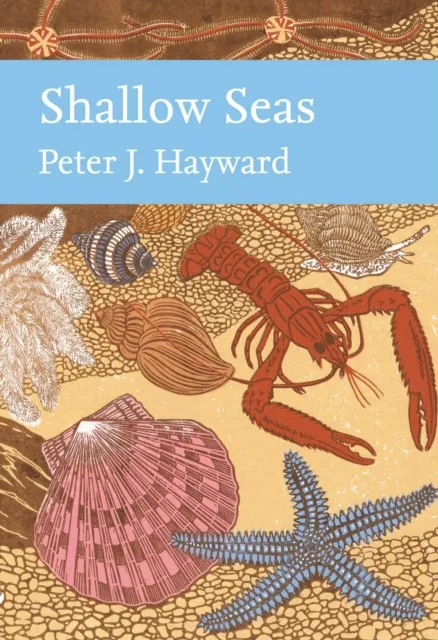
Shallow Seas

Shallow Seas and Their Biological Richness
Shallow Seas are the most biologically rich and productive areas of the world ocean. This latest New Naturalist volume provides a natural history of this environment and its biological communities. The margins of the continents, especially broad in the North Atlantic region, are drowned by shallow seas, creating a sea floor environment which is part of the wider and deepening benthic realm – the ecological region at the lowest level of a body of water such as an ocean or a lake, including the sediment surface and some sub-surface layers. These ‘shelf seas’ are the most biologically rich and productive areas of the world ocean.
In his latest New Naturalist volume, Peter Hayward addresses some aspects of the natural history of the benthic environment of the shelf seas of northwest Europe and its biological communities.
Characteristics of the Seafloor
Away from rocky coastlines the seafloor is rather flat, often muddy, beneath turbid water with low or no visibility. Benthic faunas mostly live within the sediment of the seafloor, or are sparsely and patchily distributed upon it, and if at all motile are likely to withdraw into burrows or move quickly away on disturbance. Yet, dredges and grabs reveal an often extraordinary diversity and density of animals, suggestive of complex interacting communities.
Scope of the Book
This is not a textbook of marine benthic ecology, nor is it a comprehensive review of the benthic communities of the northwest European shelf seas. Rather, it describes the natural history of some benthic habitats and associations characteristic of our region.