£161.95
Shale
Subsurface Science and Engineering

Advances in theories, methods and applications for shale resource use
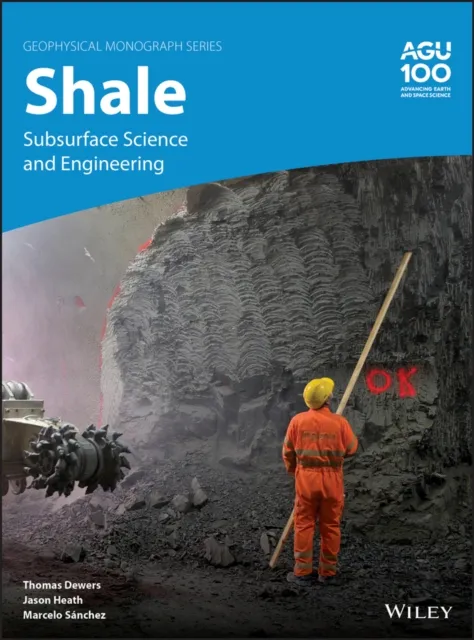
Shale: Subsurface Science and Engineering brings together geoscience and engineering to present the latest models, methods and applications for understanding and exploiting shale formations.
Volume highlights include:
- Review of current knowledge on shale geology
- Latest shale engineering methods such as horizontal drilling
- Reservoir management practices for optimized oil and gas field development
- Examples of economically and environmentally viable methods of hydrocarbon extraction from shale
- Discussion of issues relating to hydraulic fracking, carbon sequestration, and nuclear waste storage
Book Review: I. D. Sasowsky, University of Akron, Ohio, September 2020 issue of CHOICE, CHOICE connect, A publication of the Association of College and Research Libraries, A division of the American Library Association, Connecticut, USA
Shale has a long history of use as construction fill and a ceramic precursor. In recent years, its potential as a petroleum reservoir has generated renewed interest and intense scientific investigation. Such work has been significantly aided by the development of instrumentation capable of examining and imaging these very fine-grained materials. This timely multiauthor volume brings together 15 studies covering many facets of the related science. The book is presented in two sections: an overview and a second section emphasizing unconventional oil and gas. Topics covered include shale chemistry, metals content, rock mechanics, borehole stability, modeling, and fluid flow, to name only a few. The introductory chapter (24 pages) is useful and extensively referenced. The lead chapter to the second half of the book, "Characterization of Unconventional Resource Shales," provides a notably detailed analysis supporting a comprehensive production workflow. The book is richly illustrated in full color, featuring high-quality images, graphs, and charts. The extensive index provides depth of access to the volume. This work will be of special interest to a diverse group of investigators moving forward with understanding this fascinating group of rocks.
Summing Up: Recommended. Upper-division undergraduates through faculty and professionals.