£44.99
Shakespeare's Influence on Karl Marx
The Shakespearean Roots of Marxism

Introduction
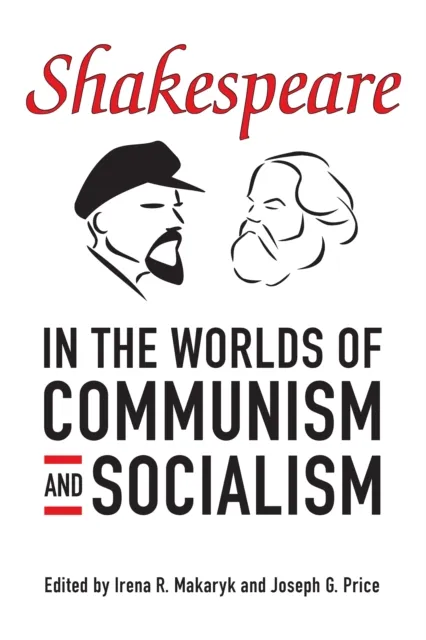
This volume presents a close reading of instances of Shakespearean quotations, allusions, imagery and rhetoric found in Karl Marx’s collected works and letters, which provides evidence that Shakespeare’s writings exerted a formative influence on Marx and the development of his work. Through a methodology of intertextual and interlingual close-reading, this study provides evidence of the extent to which Shakespeare influenced Marx and to which Marxism has Shakespearean roots.
Marx’s Early Influences
As a child, Marx was home-schooled in Ludwig von Westphalen’s little academy, as it were, which was Shakespeare- and literary-focused. The group included von Westphalen’s daughter, who later became Marx’s wife, Jenny. The influence of Shakespeare in Marx’s writings shows up as early as his school essays and love letters. He modelled his early journalism partly on ideas and rhetoric found in Shakespeare’s plays.
Development of Marx’s Thought
Each turn in the development of Marx’s thought—from Romantic to Left Hegelian and then to Communist—is achieved in part through his use of literature, especially Shakespeare. Marx’s mature texts on history, politics and economics—including the famous first volume of Das Kapital—are laden with Shakespearean allusions and quotations. Marx's engagement with Shakespeare resulted in the development of a framework of characters and imagery he used to stand for and anchor the different concepts in his political critique.
Marx’s Style and Legacy
Marx’s prose style uses a conceit in which politics are depicted as performative. Later, the Marx family—Marx, Jenny and their children—was central in the late-19th-century revival of Shakespeare on the London stage, and in the growth of academic Shakespeare scholarship. Through providing evidence for a formative role of Shakespeare in the development of Marxism, the present study suggests a formative role for literature in the history of ideas.