£119.50
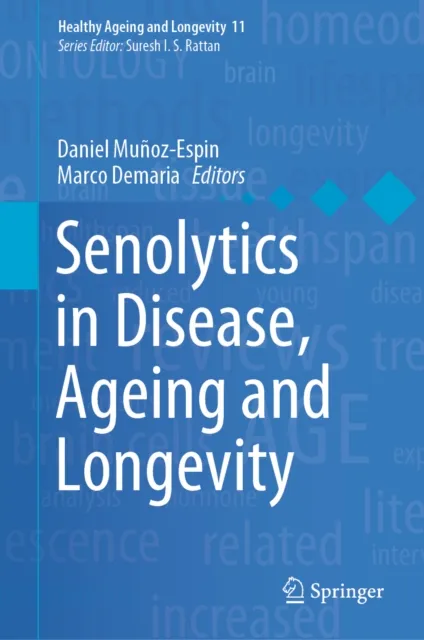
Senolytics in Disease, Ageing and Longevity

Overview of the Science of Senescent Cells
This book offers comprehensive information on the new and rapidly evolving science of identifying and targeting senescent cells, and on the exciting prospect of new diagnostic and therapeutic opportunities for stopping, and even reversing, the progression of disease and the deterioration of the human body due to ageing.
Global Demographic Changes
According to recent United Nations data, by 2050 one in six people worldwide will be older than age 65, with peaks rising to one in four people in Europe and North America. Remarkably, the number of persons aged 80 years or older is expected to triple, from 143 million in 2019 to 426 million in 2050.
Historical and Scientific Background
First documented in the 1960s, the concept of cellular senescence as an underlying cause of ageing has been established in the course of the last decade. Using genetically engineered mouse models, researchers have demonstrated that the selective elimination of senescent cells can block and even reverse a number of age-related dysfunctions and pathologies, promoting both better health and longer life in the elderly. These include cardiovascular diseases; neurological disorders; type 1 and type 2 diabetes; inflammatory diseases; fibrosis; geriatric syndromes; chronic diseases resulting in organ dysfunction; the integrity of the musculoskeletal system; and cancer. Some senolytic agents have already progressed into trials. These include UBX0101 for the treatment of osteoarthritis (now in phase II), a cocktail of dasatinib and quercetin for the management of idiopathic pulmonary fibrosis and chronic kidney disease, and ABT-263 in combination with senescence-inducing chemotherapies for the treatment of advanced solid tumours.
Future Directions and Audience
In addition, the book discusses pathways to early phase clinical trials and translational approaches in medicine and ageing, highlighting new opportunities as well as current limitations, challenges and alternatives. Given its scope, it will benefit a broad audience of advanced educators, researchers, graduate students and practitioners.