£4.98
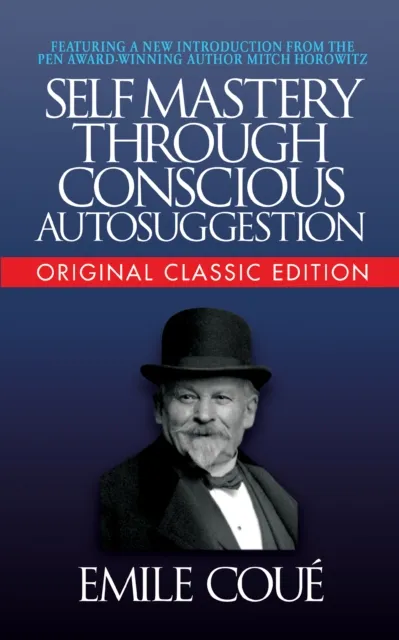
Self-Mastery Through Conscious Autosuggestion (Original Classic Edition)

Self Mastery Through Conscious Autosuggestion
Self Mastery Through Conscious Autosuggestion is an instruction manual in the ideas and methods of the early twentieth-century French psychologist Emile Coué.
Shortly before his death in 1926, this self-taught therapist became an international sensation for his program of “conscious autosuggestion.” His method challenged the existing reliance on chemicals and clergy, causing quite a stir throughout the scientific and religious communities.
In this volume, discover Coué’s method of how to:
- Reprogram your psyche through the repetition of key mantras or affirmations
- drastically improve health
- Revamp your self-image
- Feel a greater sense of well-being
- Affirm daily in a simple mantra: “Day by day, in every way, I am getting better and better”
Critics mocked the simplicity of his program, but tens of thousands of followers in the United States and Europe swore that Coué had turned their lives around with methods that could be tried any time, and anywhere.
This Original Classic Edition is a work of real and unique value. It includes an introduction by Mitch Horowitz, a PEN Award-winning historian and the author of books including The Miracle of a Definite Chief Aim, The Power of the Master Mind and The Miracle Club: How Thoughts Become Reality. The Washington Post says Mitch “treats esoteric ideas and movements with an even-handed intellectual studiousness that is too often lost in today’s raised-voice discussions.”