£52.99
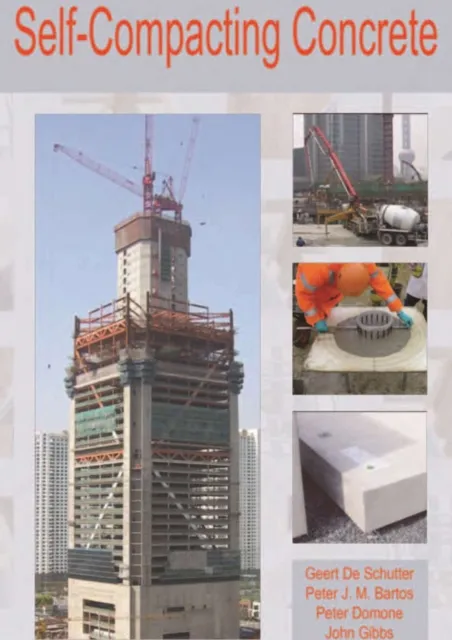
Self-compacting Concrete

Introduction to Self-Compacting Concrete
During the last decade, concrete technology has made an enormous advance through the introduction of self-compacting concrete. This application of nanotechnology in construction provides benefits from the perspective of materials technology and environmental protection and is presenting diverse opportunities to engineers and architects alike.
Properties and Testing
Good quality concrete is compacted, traditionally by vibration. This book defines the key properties that make fresh concrete self-compacting and outlines test methods for its assessment.
Principles and Practical Advice
It covers the basic principles and underlying scientific theory, practical advice for production of SCC and its use in construction practice, and is illustrated by practical case studies and applications.
Construction Process and Benefits
All stages of the self-compacting concrete construction process are reviewed, from selection of materials, mix design and mixing process to transport, placing and finishing. The range of benefits offered go beyond fundamental aspects of concrete quality and productivity; it includes a major improvement in the health and safety of workers.
Reductions of noise levels on construction sites, together with utilisation of inorganic industrial wastes such as quarry dusts are additional benefits.
Maximising Benefits and Structural Innovations
Information necessary for maximising the benefits offered by self-compacting concrete is provided, with an emphasis on an integrated approach, in which SCC is already selected in the design stage. Novel structural elements become feasible, in part due to the facility to pump under pressure, and management of the construction process can be adjusted to minimise costs.
Case Studies and Practical Applications
Significant completed projects are described which illustrate the potential benefits and key aspects of the new self-compacting concrete technology in practice.