£45.00
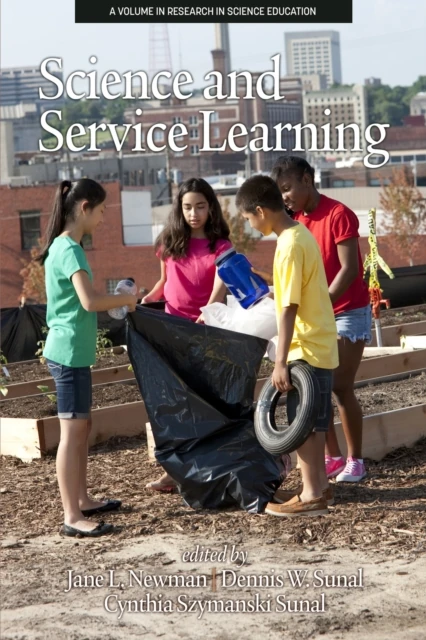
Science and Service Learning

Introduction
The goal of Volume VII of Research in Science Education is to examine the relationship between science inquiry and service-learning. Its primary intent is to bridge the gaps between research and practice. The volume is meant to be useful to science and service-learning researchers and practitioners such as teachers and administrators because it provides information about strategies to integrate service-learning into the science curriculum and instruction.
Main Themes
The main themes relate to such topics as:
- Student science academic engagement and academic achievement.
- Teacher instructional strategies in science and service-learning.
- Science curricula adaptation or development.
- Civic responsibility of students and community partners.
- Resiliency of students at-risk.
- Effect of standards based service-learning and science on student outcomes such as academic engagement, civic engagement, and resiliency to adversity.
Strategies and Focus Areas
Specific case studies and strategies focus on how to:
- Make learning more engaging.
- Encourage collaboration among students, teachers, and community partners.
- Improve academic competence.
- Create social/civic responsibility.
- Stimulate resiliency in students at-risk.
- Improve student interest in STEM subjects and majors.
- Develop STEM career interests.
- Improve the quality of science and service-learning instruction through addressing standards.
Learning Approaches
Students can learn in teacher-centered classrooms, however, a learner-centered class that focuses on science inquiry, and service-learning is more authentic and engaging to learners. This type of learning may not be the only way to teach, however, many educators believe that it is the best way for students to learn (Jordan, 2005).