£37.99
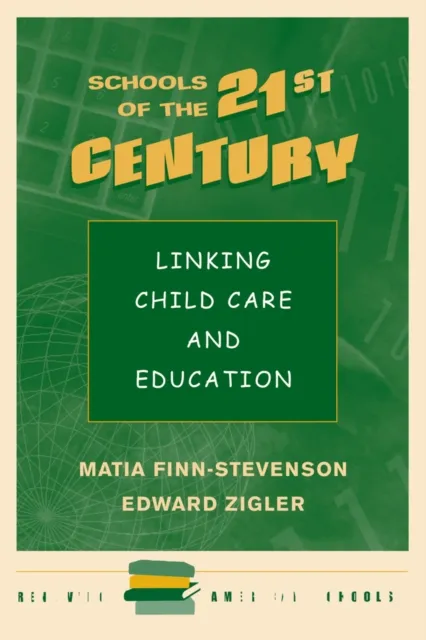
Schools Of The 21st Century
Linking Child Care And Education

Introduction
An engaging discussion about the new roles schools are taking and how they are expanding their traditional mission.
Authors' Argument
In this timely book, Matia Finn-Stevenson and Edward Zigler argue that the federal government alone cannot address the need for child care and family support services that, like education, should be addressed locally.
Schools of the 21st Century Program
The authors use their Schools of the 21st Century (21C) program as an example of how schools can provide child care, outreach services, home visitations, and health and nutrition services in addition to reading, writing, and arithmetic.
Content Overview
Whereas Part Two of the book discusses the authors' Schools of the 21st Century program in considerable detail, Parts One and Three address a broader range of issues concerning the effects that early education has on later school success and the various policy and conceptual approaches that have been tried, both nationally and internationally, in an effort to reform schools.
The authors also critically review the research on the effects of child care on children's development and the importance of family support services. Included is a wealth of information on the research and practical applications of school reform initiatives in general and the implementation of child and family support services in particular.
Historical Context and Implementation
Conceptualized in 1987 in response to the child care crisis in this country, 21C has been implemented in over 600 schools in seventeen states.
However, schools' involvement with increasingly younger children is not without controversy. The authors also address questions regarding evaluation and effective implementation and scale-up strategies, and consider what changes in teacher training programs should occur to prepare teachers for working in schools of the twenty-first century; what provisions should be made to accommodate the need to staff schools with personnel trained in early child development; and what changes need to be made in the financial structures of schools to accommodate child care and support services.
Broader Issues and Research
Whereas Part Two of the book discusses the authors' Schools of the 21st Century program in considerable detail, Parts One and Three address a broader range of issues concerning the effects that early education has on later school success and the various policy and conceptual approaches that have been tried, both nationally and internationally.
Finn-Stevenson and Zigler also critically review the research on the effects of child care on children and other school reform initiatives that have been implemented in schools.
Conclusion
Schools of the 21st Century is an engaging discussion about the new roles schools are taking and how they are expanding their traditional mission.